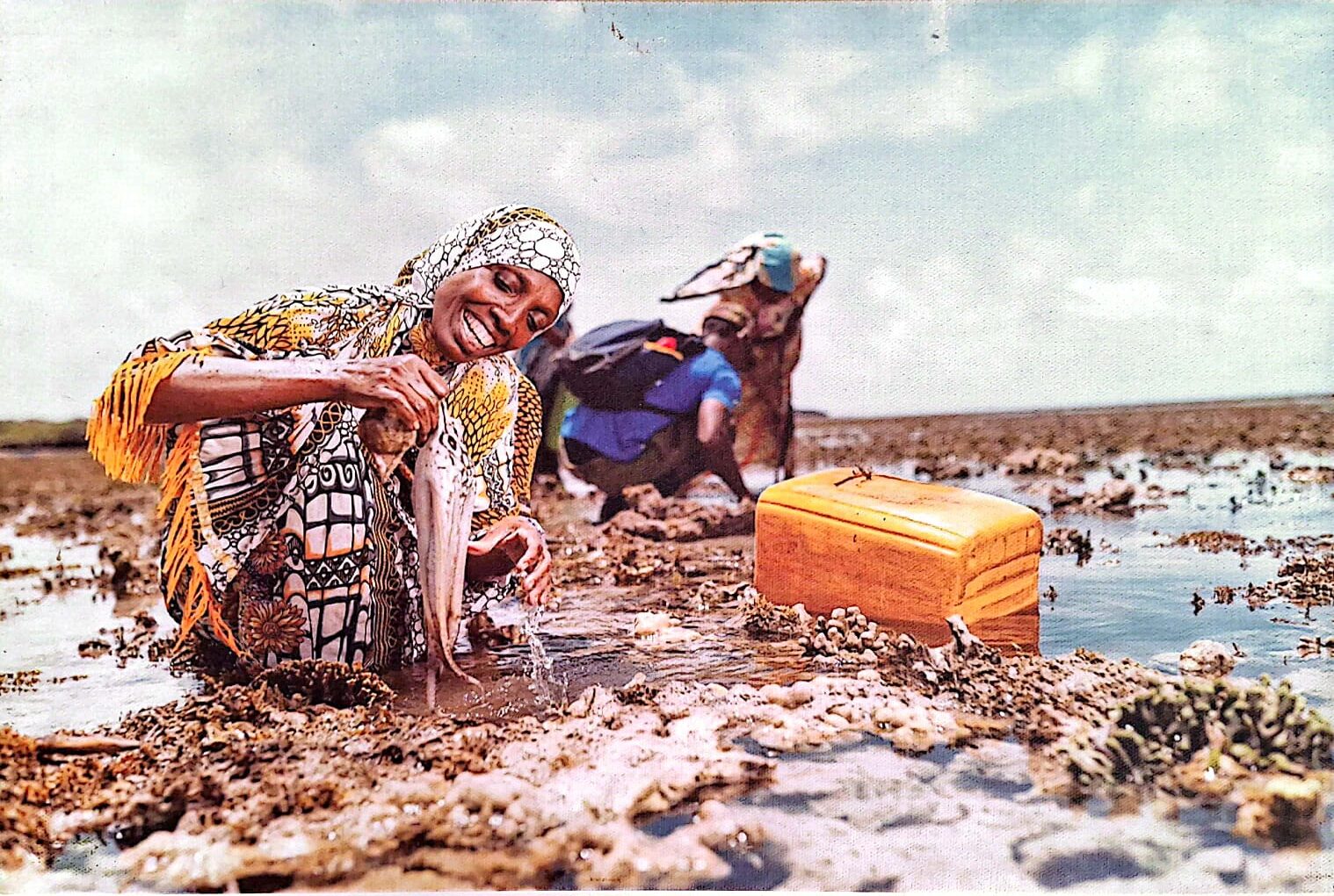
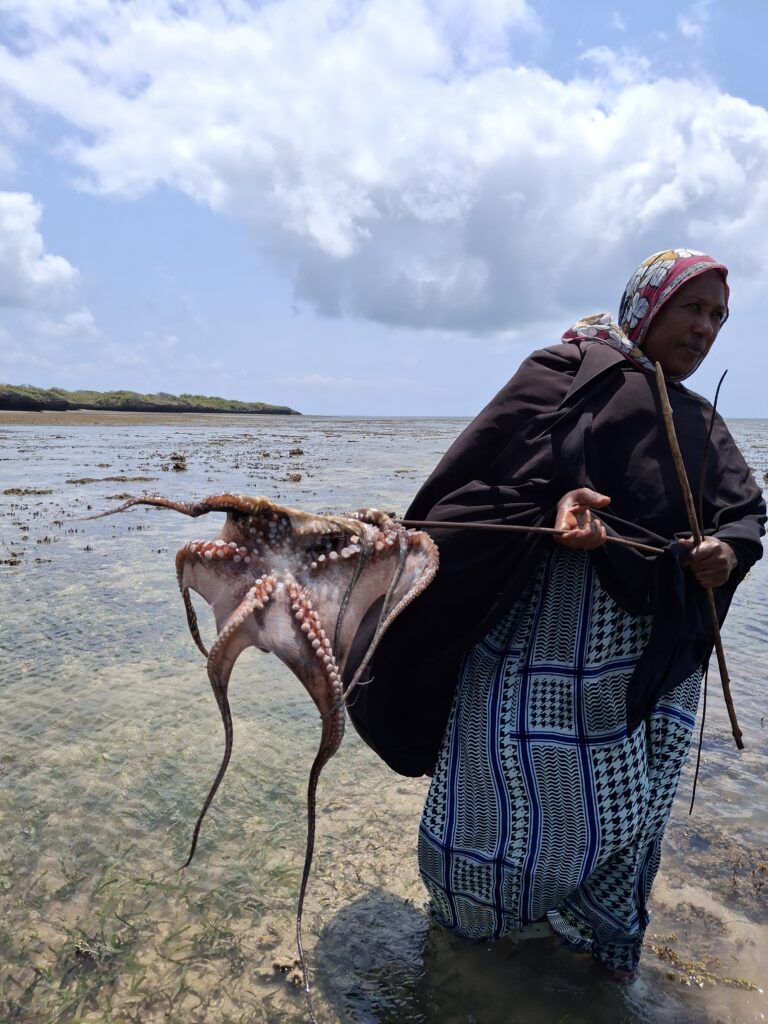
Amina Ahmed (Mama Pweza), chairperson of Shanga Ishakani Women Fishers Group displaying one of her catches of the day in Lamu| Photo By TNC
In the sunbaked creeks of Lamu and Kwale counties, women like Amina Ahmed popularly known as “Mama Pweza”, wade through the ocean daily for octopus, a lifeline for food security and incomes in Kenya’s coastal communities. Octopus fishery is also done in Tana River, Mombasa and Kilifi Counties. Once a free-for-all fishery yielding abundant catches, octopus stocks have tumbled to a 50% low in two decades, with fishers catching as little as 5kg per day. Overfishing, habitat destruction, and climate change have all conspired to suffocate this vital resource, which landed 2,250 metric tons worth KSh650 million in 2025, according to the Kenya Fisheries Service (KeFS).
However, amid the challenges, a multi-stakeholder push is charting a path to sustainability, rekindling the hopes of thousands of fishers who depend on this fishery.
The Kenya Octopus Fishery Scientific and Management Working Group (SMWG) comprising Kenya Marine and Fisheries Research Institute (KMFRI), Kenya Fisheries Service (KeFS), coastal county governments, universities, NGOs like The Nature Conservancy (TNC), and community groups, among them the Beach Management Units (BMUs) has produced a draft Harvest Strategy and Management Plan for the fishery.
These tools, unveiled at a recent stakeholder forum in Kilifi aim to shift the fishery from “under-managed” to sustainably governed, using global best practices like the FishPath tool.
“Fisheries are essential for livelihoods and proteins for 3 billion people worldwide, yet over half are overfished,” said George Maina, Africa Fisheries Strategy Manager at TNC. FishPath, he explained, guides assessments and management options tailored to octopus biology, fast-growing but vulnerable to pressure.
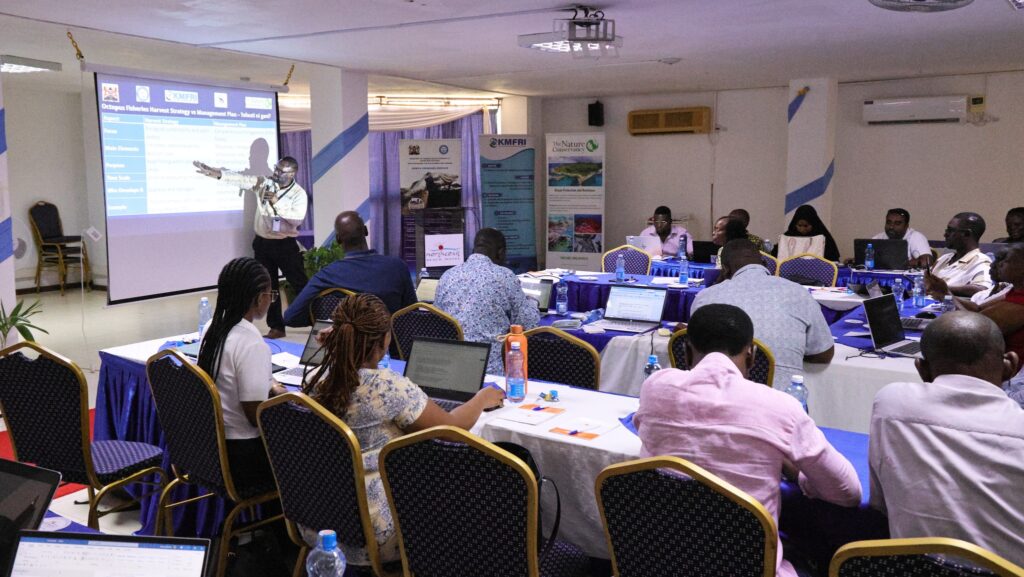
“We’ve united fishers, scientists, and private sector in a long journey to create a framework: when to fish, how to collect data, and adjust based on stock status.”
He added, “We have put together a plan on how data will be collected, how that data will be managed and how the analysis will be done to meet the objectives of the management of the octopus fishery.
“That’s why the two documents are presented to the stakeholders to provide their input. The harvest strategy is short term part of the management plan, while the management plan is a long term.”
The Root of the Crisis
Dr. Gladys Okemwa, KMFRI’s Assistant Director of Marine and Coastal Fisheries Research and SMWG member, pinpointed the key drivers to the dwindling stocks including increase in the number of fishers.
“While we appreciate that the people depend on the stocks for their livelihood and food security, we must appreciate that the number of fishers are increasing. If you look at the biology of octopus it reproduces very fast and within two years an octopus has grown from a juvenile to maturity. Although it has a fast growth rate, increasing pressure and fishing all the adults affects the ability of the stock to replenish itself.”
She further explained that habitat degradation as a result of fishers using illegal fishing methods like spear guns destroys the corals and once they break the corals which house the octopus, the fish move away.
“Climate change leading to warming is another area of concern. When the water warms up above a certain temperature, the little octopus can’t survive, and if they don’t survive the population drops,” she said.
“From our assessment, what we are seeing is that we have a good overarching structure, a very good legal structure like the Fisheries Act, national legislations are there but we realize we lacked the hands on operational management guidelines to help support the fishery.
“We conducted ecological risk assessment and we realized that we are not doing too well. As part of the assessment we were able to identify our strengths and weaknesses and one of the major weaknesses is on data collection,” she said.
Dr Okemwa attributed this to low attention on the octopus fishery while at the same time the data that is collected is not done in a structured manner hence it’s not able to inform about the risks and stocks available.
“One of the measures we are undertaking is data collection and monitoring so that we can ask researchers to come up with more confident answers about the status of the fishery.
“We have also looked at the harvesting aspects. There are a number of measures we have proposed and one of them is limiting the minimum size of octopus landed by fishers to not less than 500 grams,” said Dr Okemwa.
Jared Agano, KeFS Acting Director of Capture Fisheries, emphasized equity noting that octopus is a priority fishery for its value and women’s involvement, especially in Lamu, where female-led groups thrive.
“The Octopus Fishery Management plan adopts an ecosystem approach, boosting the value chain from harvest to market while curbing post-harvest losses,” said Agano.
He added, “This is an important fishery and we are coming up with a plan that will ensure sustainable use for this generation and posterity. It is focusing on the people involved in the fishery while looking at the ecosystem, the nexus between this fishery and the environment. The plan being developed has factored the aspect of the environment, the livelihood and the fishers who are involved.”
Voices from the Reef
The community was not left out in this initiative as their contribution was captured through the indigenous knowledge. Amina Ahmed, chairperson of Shanga Ishakani Women Fishers Group, started fishing as a schoolgirl and now trains women across Lamu on sustainable fishing.
For her, fishing has been her lifelong career right from the time she was in school. “While fishing from such a tender age, we developed the urge to start conservation of the marine resources and it is this that has made me a trainer traversing the entire Lamu County and beyond to empower women fishers.
“Our grandparents used to fish without any inhibitions and the catches were very big. Unfortunately, today, we have so many fishers unlike in the past. In my area alone there are about 160 women octopus fishers leading to the decline in stocks.”
She blames ravages of nature from climate change and massive development projects like the Lamu port where dredging of the channel disrupted the marine ecosystem.
“I am happy with this stakeholders meeting because it has enabled fishers especially women to be part of this initiative towards sustainable use of the resource. Developing the strategy and the plan has come at the right time.
“Issues like when and how to harvest octopus, including the size to be fished are very critical to the stability of the fishery. What is inspiring is that the fishers were involved in the development of the plan and the strategy through the BMU network,” said Amina.
Somo Mohamed Somo, chairperson of the Indian Ocean Water Body BMU Network, hailed the blend of science and tradition. He said harmful gears like scuba diving destroy corals and spark conflicts, threatening food security.
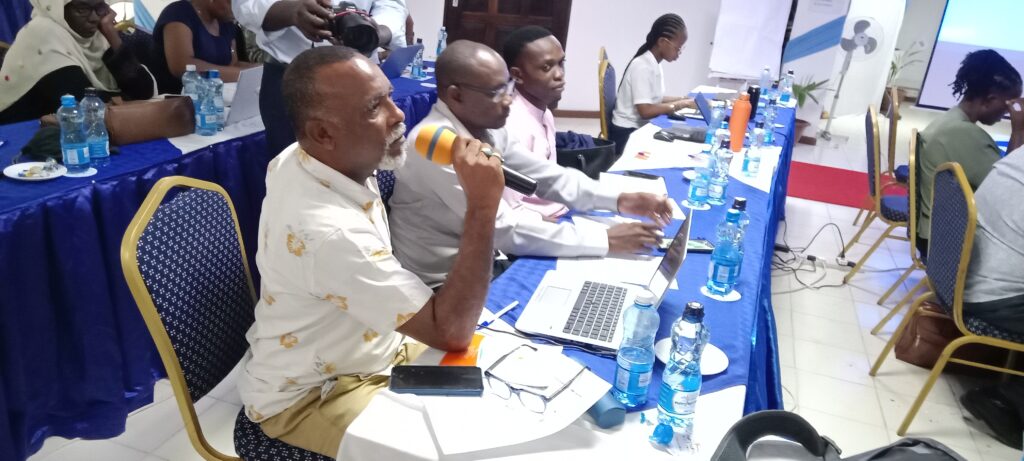
“We have also seen that the use of some of these fishing methods such as scuba diving and trawling contributing to a lot of conflict between commercial fishers and small scale fishers. Octopus is one of the fishery that contributes to food security therefore if the stocks are depleted it means food security is threatened. If such issues are not addressed, some of the fishers might opt to go into crime,” said Somo.
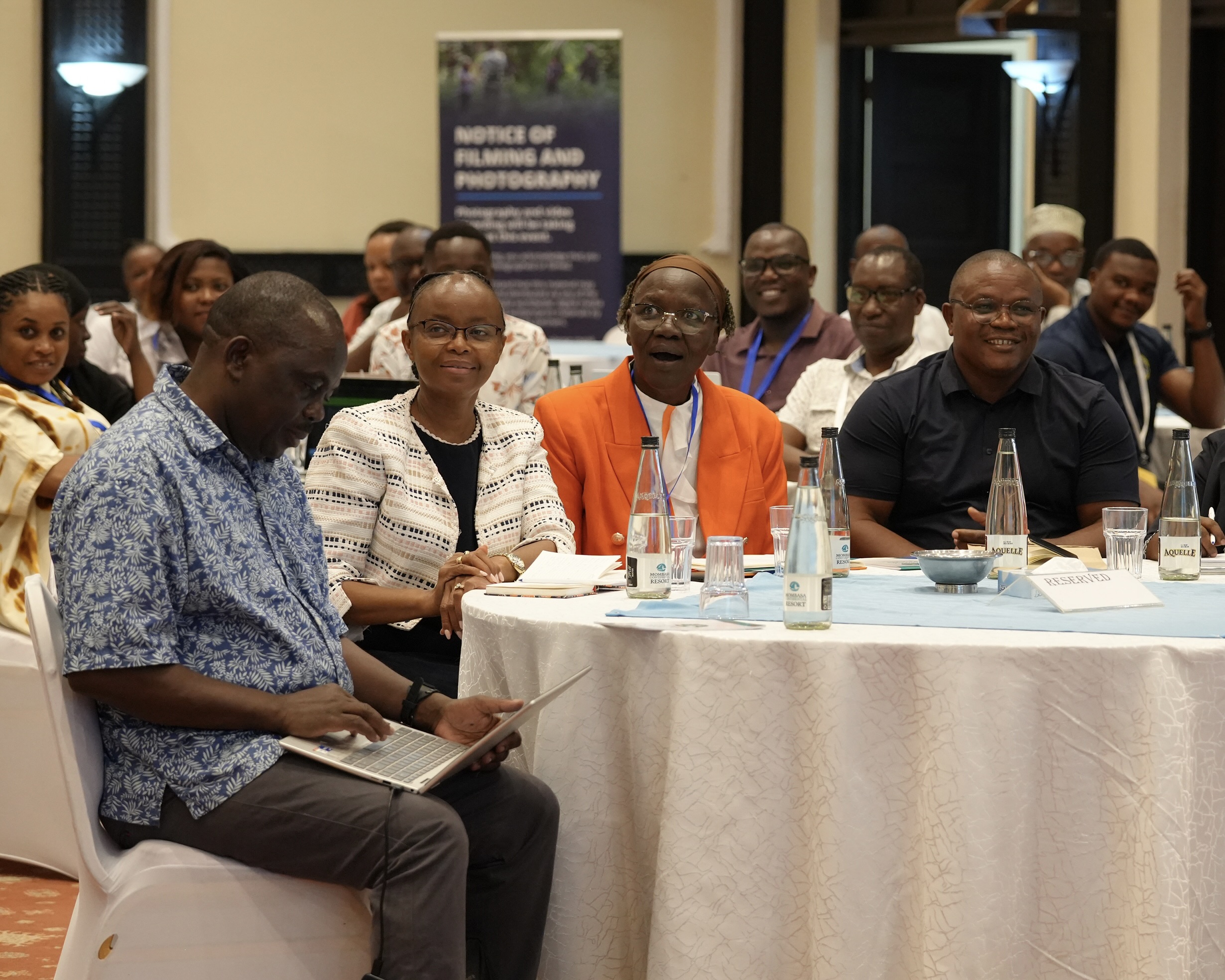
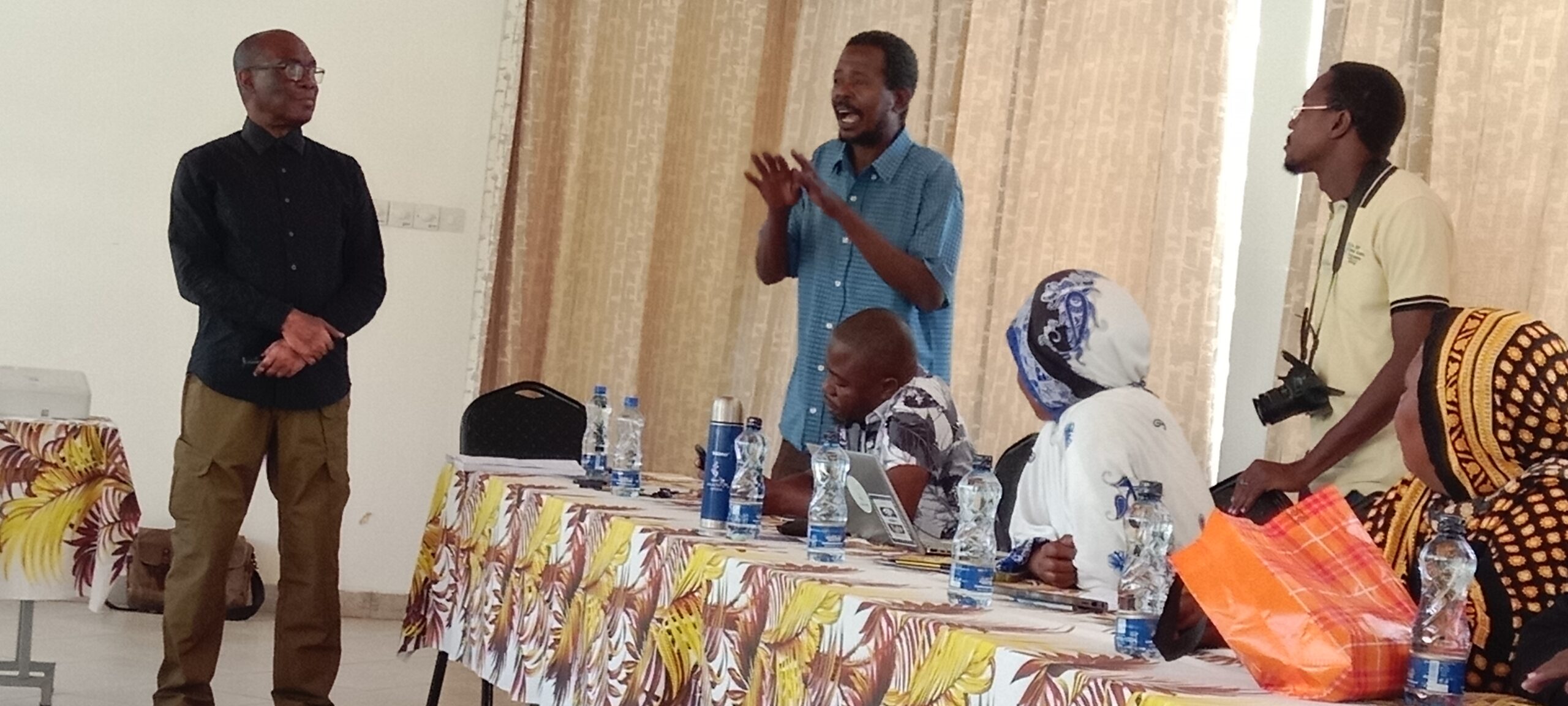
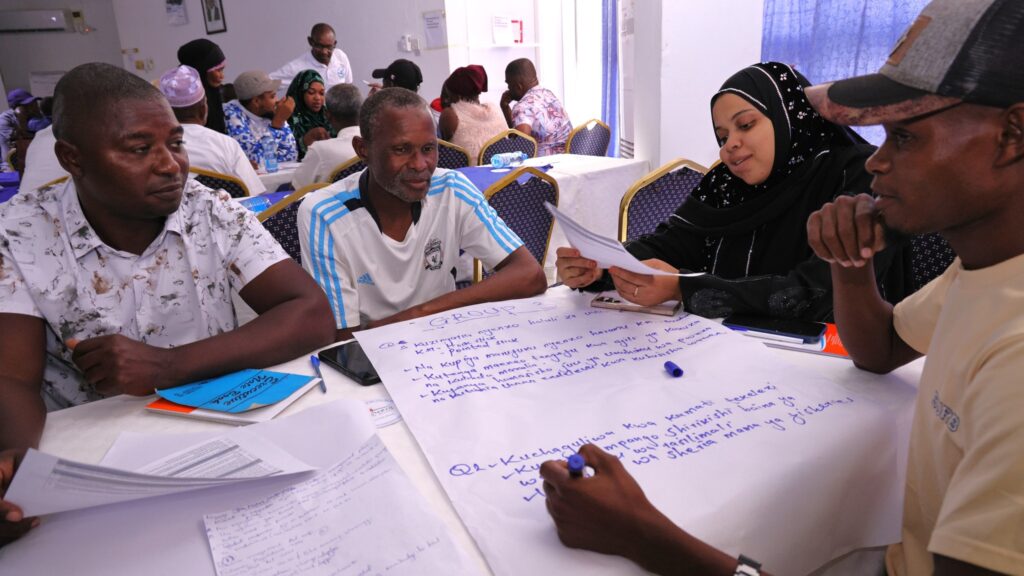
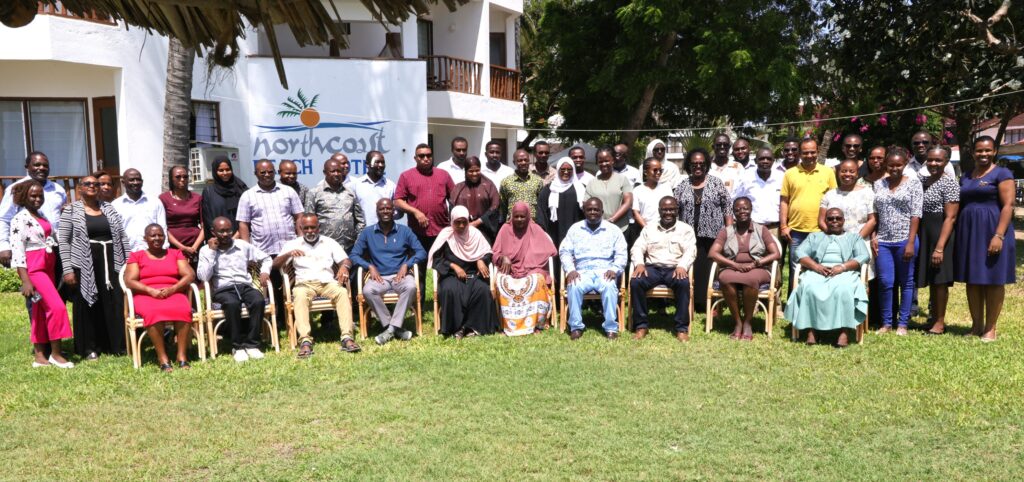
The consultation meeting was also attended by more than 120 fishers from Lamu, Tana River, Kilifi, Mombasa, and Kwale counties.
Roadmap
Maina outlined next steps that include technical meetings, fisher engagement, and private-sector roles to combat illegal, unregulated, and unreported (IUU) fishing. “Healthy fisheries mean thriving oceans and communities’ constant sustainable seafood.”
For women processors in octopus-dependent villages, success means steady livelihoods amid climate woes. As Dr. Okemwa put it, structured data will yield confident answers on stock status, refining closures to protect breeding cycles.
With 80% of fisherfolk being women in some areas, sustainable management isn’t just ecological, it’s empowerment.
Stakeholders now call for national and county agencies to endorse the drafts, fund monitoring, and extend closures across the five counties. In a sector battered by overfishing and warming seas, such robust, evidence-based tools could secure the blue economy for generations.
Naima Zuberi, a fish trader and Beach Management Unit (BMU) member from Mombasa, said the meeting met most expectations especially the plans and strategies that will ensure increase in stocks, but also exposed urgent gaps in the management of the octopus fishery. While scientific data is increasingly available, Zuberi argued that indigenous knowledge, stronger enforcement, better coordination, and alternative livelihoods must be prioritized to sustain the fishery and the communities that depend on it.
She raised concern over illegal fishing and conflict. “Declining octopus stocks has driven some fishers to desperate measures, including the use of harmful gears that degrade habitats. The arrival of fishers from other areas to exploit depleted local stocks has fueled conflicts at landing sites and along shared fishing grounds.”
As a trader, Naima proposed alternatives including training in seasonal closures management, small-scale octopus aquaculture, value addition (processing, preservation and packaging) to keep them in business even when there is limited stocks. For the wider fisher community she recommended community-based tourism that showcases octopus life cycles. “Linking with universities for practical field courses could serve as a dual opportunity to give students hands-on learning while generating income for communities.”
BACKGROUND
TNC has been working globally in small-scale coastal fisheries to support the development of sustainable fisheries management plans, harvest strategies, and the facilitation of multi-stakeholder processes to achieve these goals. A key component of this approach is FishPath (www.fishpath.org), which an expert working group developed focused on designing harvest strategies for data-limited fisheries.
In line with ongoing efforts to develop a structured approach to the management of fisheries in Kenyan waters, and consistent with global best practices, the Kenya Octopus Fishery Scientific and Management Working Group (SMWG) has been formally constituted to ensure coordinated and focused attention and fast-tracking of the fishery management initiatives.