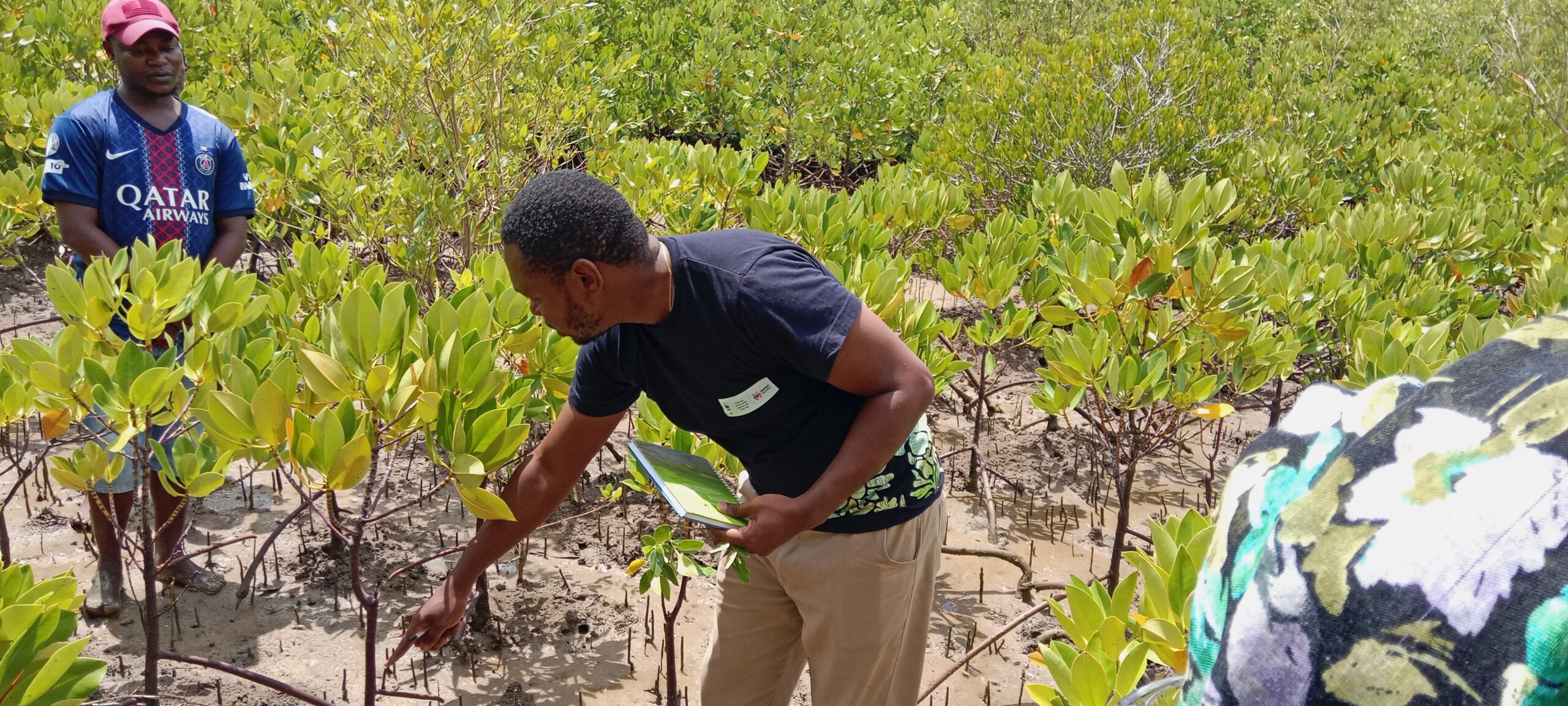
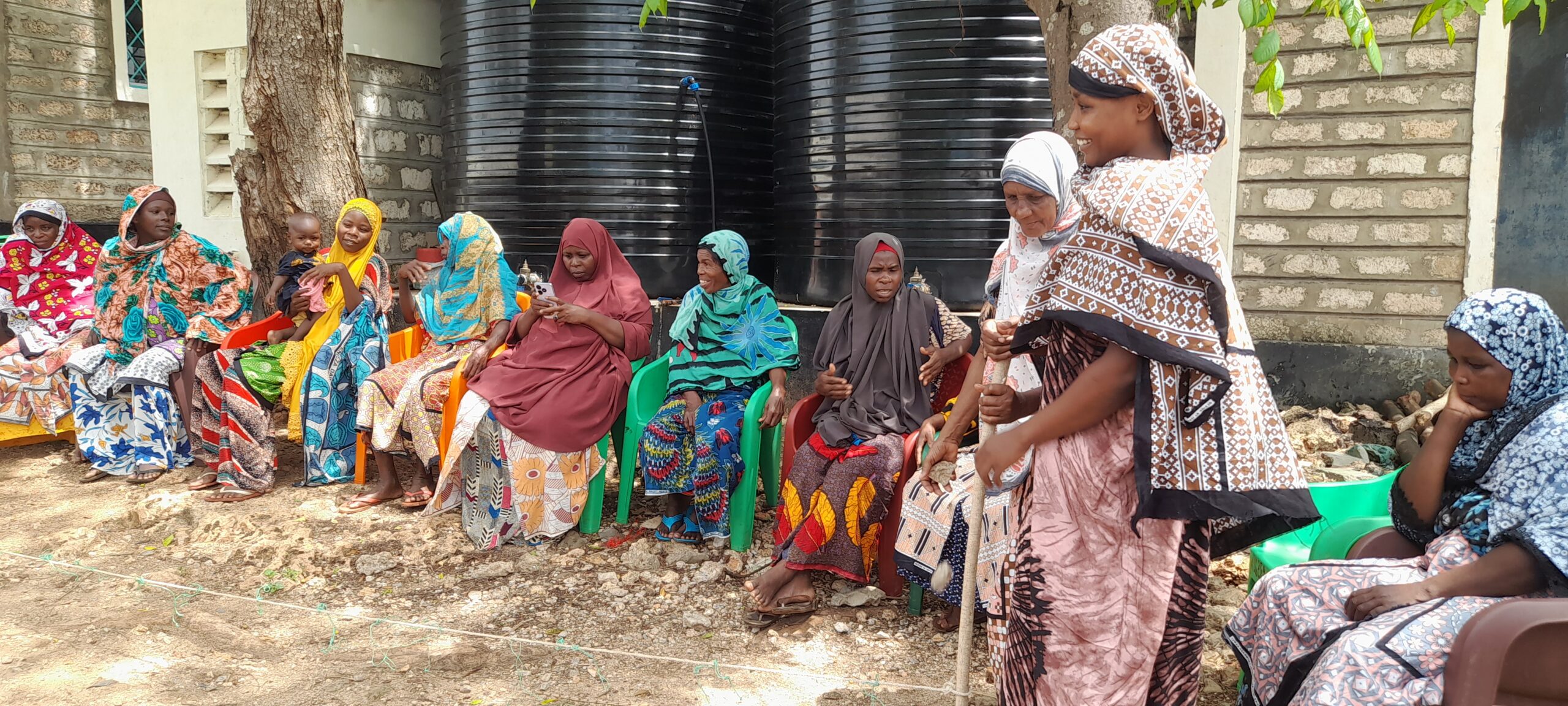
Women in Kibuyuni, Kwale County demonstrate to visiting GEF SGP team how to plant seaweed| Photo By Juma Shoka
Along the southern coastline of Kwale County in Kenya where mangrove forests meet coral reefs and shallow seagrass meadows, community groups are quietly building one of Kenya’s most promising stories of marine conservation. Moving stories of improving both biodiversity and household incomes.
From seaweed farms in Kibuyuni to turtle conservation initiatives in Shimoni, local communities are using small grants to protect fragile marine ecosystems while creating new economic opportunities and transforming lives.
At the centre of this transformation is the Global Environment Facility Small Grants Programme (GEF SGP), implemented by the United Nations Development Programme (UNDP), which is supporting ten civil society organizations across the resource-rich Shimoni–Vanga seascape.
The beneficiaries include Beach Management Units (BMUs), youth groups, women’s groups and Community Forest Associations, all undertaking projects designed to strengthen marine ecosystem management under the area’s Joint Co-Management Area (JCMA framework.
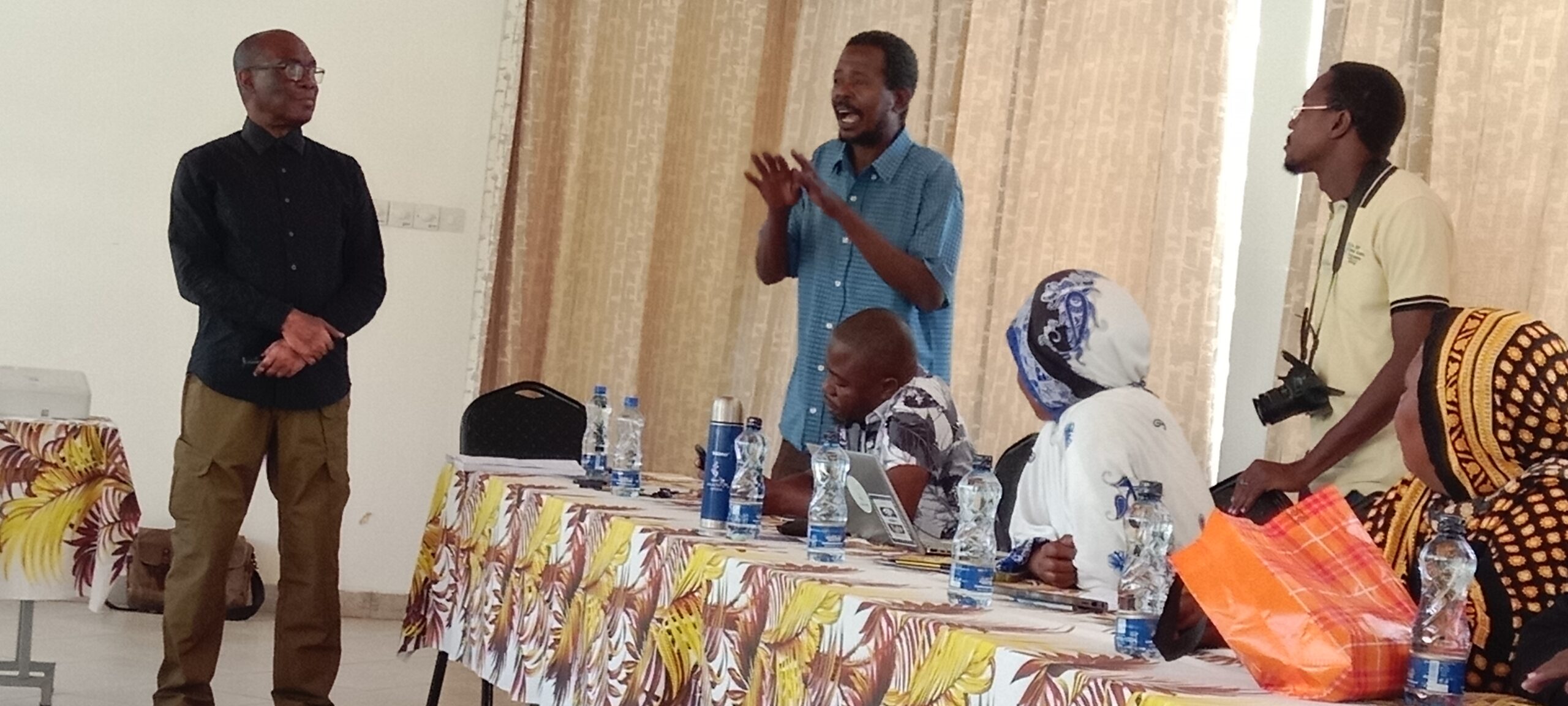
Nancy Chege, National Coordinator of the GEF Small Grants Programme, says the initiative in its second year is already showing encouraging results.
“The community groups are doing very well with projects ranging from mangrove conservation, seagrass conservation, coral transplantation and ecotourism,” she said during a monitoring visit to the area in March, 2026.
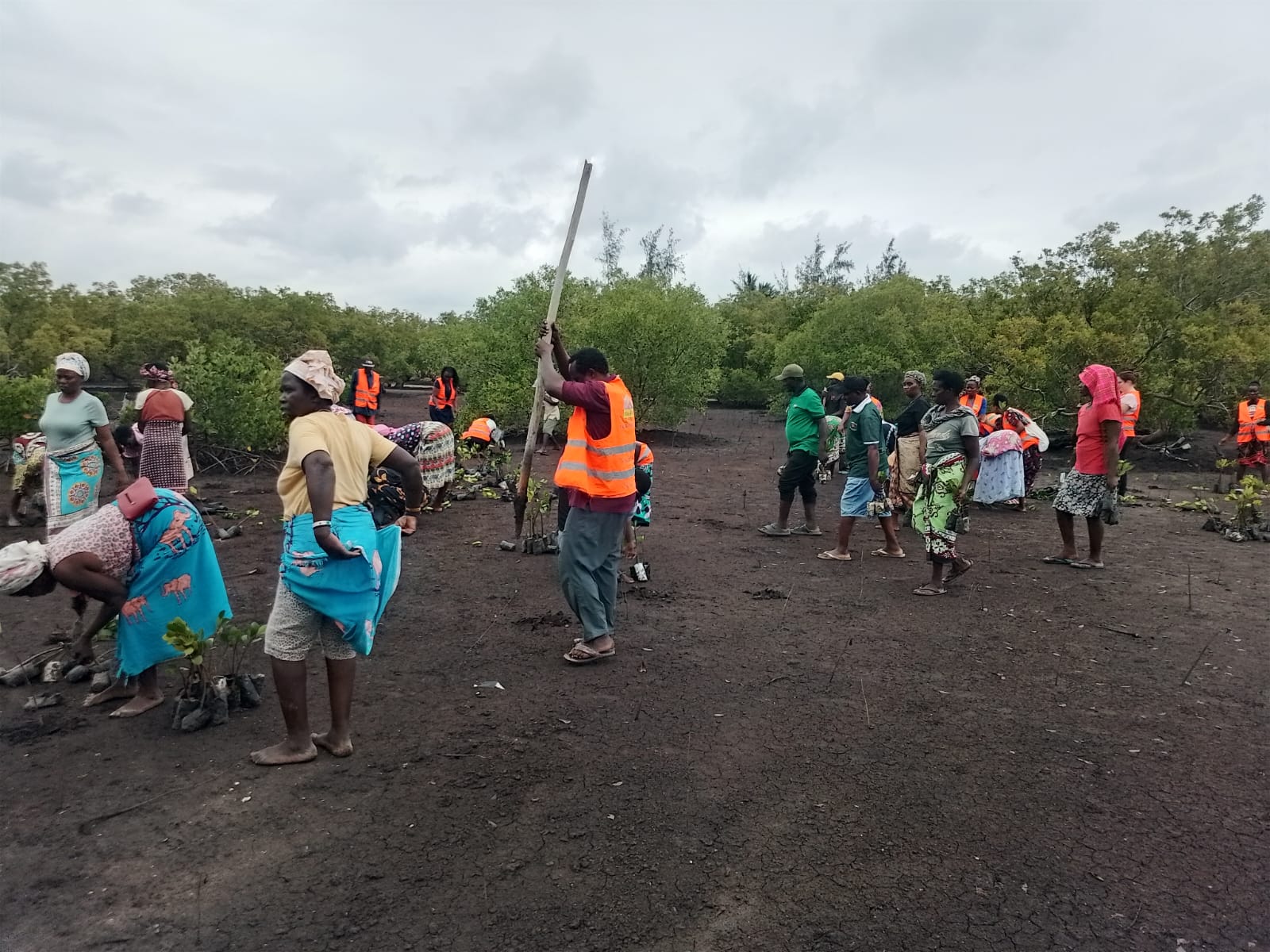
Among the standout initiatives are community-led mangrove restoration projects, turtle conservation activities and efforts to preserve coral reefs that support fisheries in the Shimoni–Vanga marine ecosystem.
Small Grants, Big Local Impact
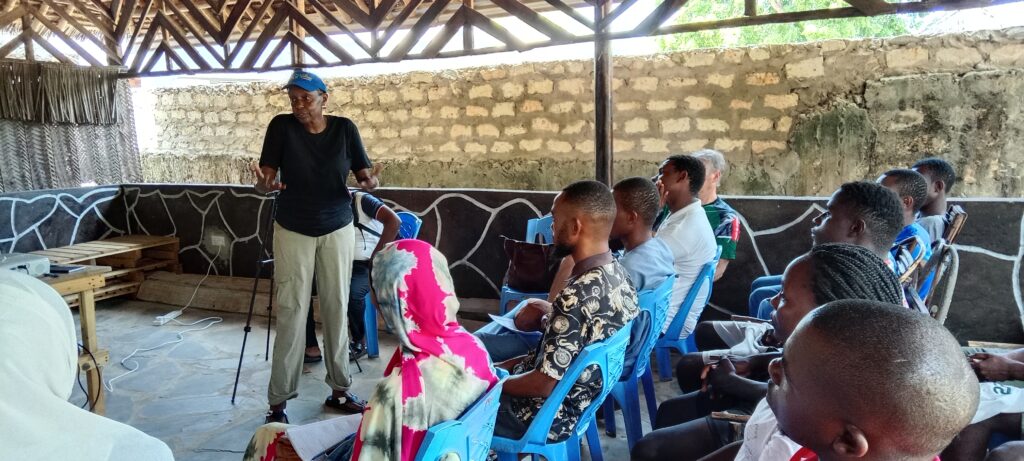
Each project under the programme received funding of up to US$30,000, roughly KSh3.5 million, a level of support that community groups say is already generating visible change.
Chege explains that one of the programme’s key strengths is its seascape approach which brings several projects into one geographic area rather than funding isolated interventions.
“By having many groups operating in the same seascape, they are able to learn from each other instead of working in silos,” she said.
The groups also benefit from technical support provided by Community Action for Nature Conservation (CANCO), a strategic partner which helps strengthen project implementation and collaboration.
“There is excellent support from the strategic partner CANCO –they have been supporting the groups individually but also collaboratively and that is very important for the groups that they are learning from one another,” said Chege.
She also echoed the involvement of Government agencies including the county fisheries department, Kenya Forest Service and Kenya Wildlife Service that are also supporting the projects by aligning them with county and national conservation priorities.
Challenges
“As much as most groups are doing well, there are issues such as group dynamics and inadequate funding for all the activities communities would like to undertake,” Chege noted.
Expanding Marine Protection
One of the strongest examples of community success is emerging from Kibuyuni, where fishers and seaweed farmers have used grant support to strengthen local marine protection.
According to Mohamed Jasho, Chairperson of Kibuyuni BMU, the project has enabled the community to expand its marine conservation zone from two kilometres to 2.8 kilometres.
“The first benefit was securing seaweed farms, especially for women farmers who were facing frequent interference because the area was not well protected,” Jasho said.
That expansion has had immediate benefits and one of the outcomes of the enlarged conservation area has been improved fish stocks.
“Increased conservation coverage has led to more fish in our waters, and fishers are now landing better catches than before,” he explained.
The BMU has also intensified patrols to combat illegal fishing.
“Some fishers were using harmful gear that destroyed breeding grounds and coral habitats, but through patrols and sensitization we have managed to control that.”
Seaweed Farming
For many households in Kibuyuni, seaweed farming is no longer a side activity, it is becoming a core livelihood.
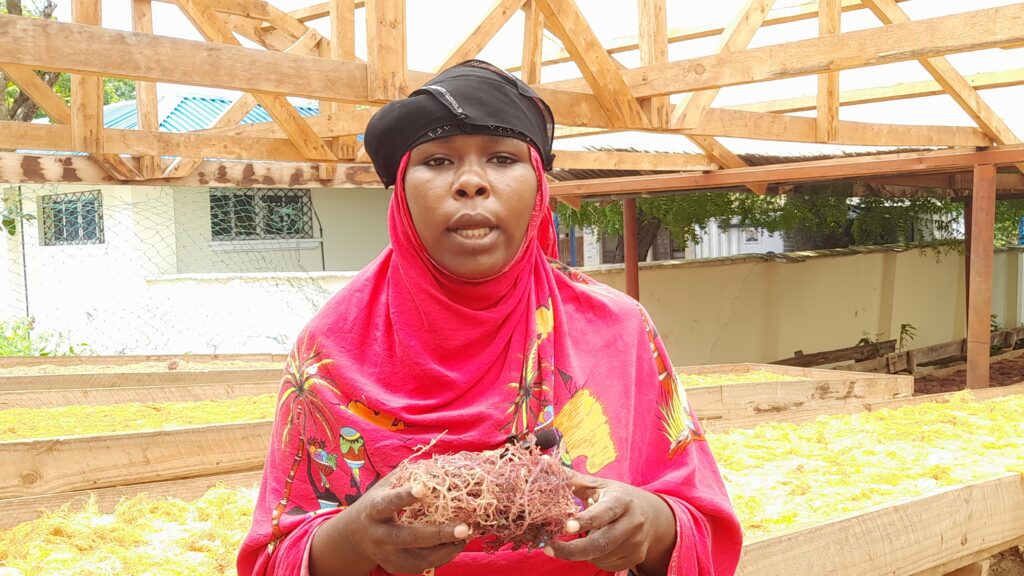
Women, who form the majority of seaweed farmers, say the economic returns are steadily improving despite market challenges.
The local cooperative currently buys seaweed at KSh50 per kilogramme, allowing farmers to either sell immediately or store produce until market conditions improve to earn more.
One farmer described how seaweed farming has evolved into a family business.
“Initially it was individual work, but now my whole family participates. During weekends, even children help at the farm,” she said.
In some cases, women farmers now hire male youth as casual labourers, creating additional employment in the village.
From casual work in the seaweed farms in Kibuyuni, helping her sister Tima Mohamed, now an established farmer recalls how seaweed farming changed her household finances.
“I joined my sister in the farm not knowing it would become my economic mainstay,” she said.
After her first few weeks of work, her sister paid her KSh20,000, an amount she least expected but one that changed her perception about the marine plant.
“That is when I realised there is serious money here. I used the money to buy sand and cement for construction at home.”
Their first independent seaweed harvest later earned KSh40,000, money she used to pay school fees.
Market Uncertainty Still a Major Obstacle
Despite rising production, seaweed farmers continue to struggle with unstable markets.
Farmers say one buyer had promised to purchase 60 tons of seaweed, but disappeared after they mobilized supply.
Hamid Juma, a member of Kibuyuni BMU, says buyers often impose conditions that small farmers cannot easily meet.
“They want seaweed in container-level volumes because they export in bulk. When farmers fail to raise the tonnage quickly, the buyer leaves.”
To reduce dependence on unreliable external buyers, farmers are now pushing for stronger value addition.
The long-term plan is to turn Kibuyuni into a collection hub for seaweed produced across the Shimoni–Vanga seascape.
Youth Driving Marine Conservation
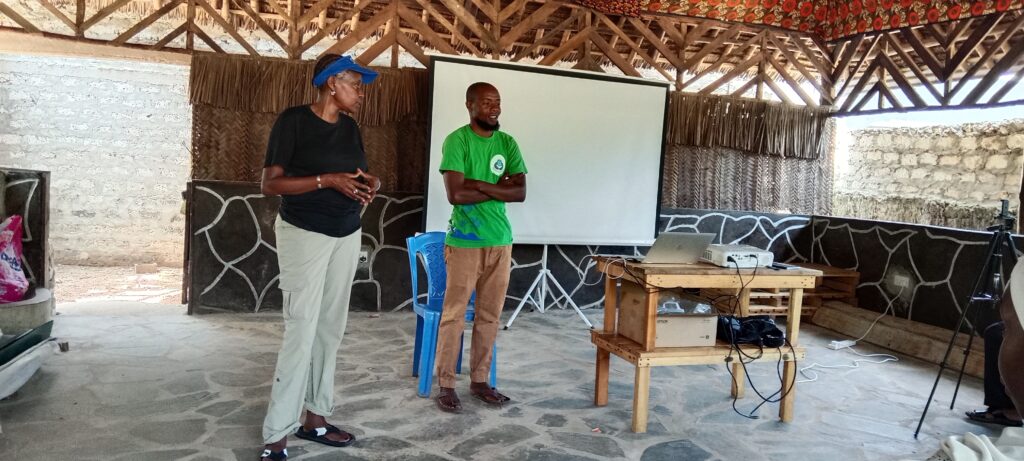
In Shimoni, youth groups are also emerging as strong conservation actors.
One notable example is Shimoni Turtle Watch, where young people are combining turtle conservation with environmental education and ecotourism.
The group brings school children and visitors to learn about endangered turtles while developing plans for a marine conservation resource centre.
Nancy Chege says youth-led conservation is challenging long-held assumptions.
“There is a perception that youth projects do not always succeed, but what we are seeing here proves otherwise.”
Omar Salim Mbwana, Shimoni Turtle Watch Project Lead says they have committed themselves to protecting the sea turtles. “The community needs to be educated to be part of this campaign to protect the sea turtles especially on the use of harmful fishing gear and plastic that continue to endanger the sea creatures.
“From the grant that we received, there are a few things that we have been able to develop including a comic book that we will take to schools. Through this book the learners will be able to learn about the ecology of the turtle.
Omar further said that through the GEF SGP some youths have been sponsored to learn scuba diving, a skill which greatly helps in monitoring turtles under water. “There is also a documentary showcasing the beauty underneath the ocean and turtles.”
Fatma Mohamed, a young lady from the area is one of the direct beneficiaries of the project.
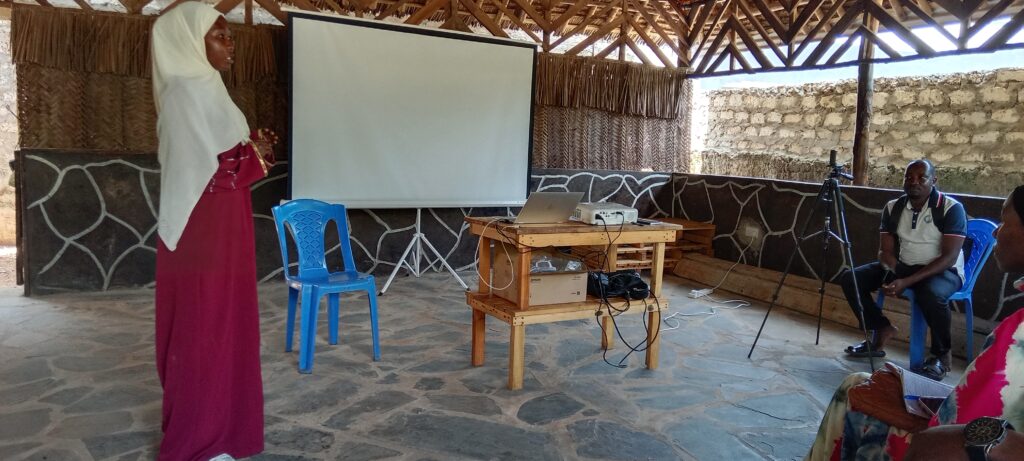
“Through my membership of the Shimoni Turtle Watch, I have learnt how projects are being implemented in the community. One major benefit for me is learning how to swim and starting diving lessons which is key in monitoring turtles, getting data and understanding the life of this creature,” she said.
The local conservation efforts are also attracting international attention.
Professor Daniel Kammen from Johns Hopkins University who visited the coast ahead of the Our Ocean Conference, said the region has enormous untapped potential.
“I have seen projects ranging from turtle conservation to seagrass and sea moss initiatives. The human capacity here is impressive, but it is under-resourced,” he observed.
He believes the Shimoni–Vanga model could become a global example of community-driven coastal sustainability.
“The opportunity to make a huge sustainability story out of the Shimoni–Vanga seascape could transform coastal management not just in Africa, but also in Southeast Asia and the Caribbean.”
Kammen argues that future investment should move beyond protecting single species and instead support wider ecological zones managed by communities.
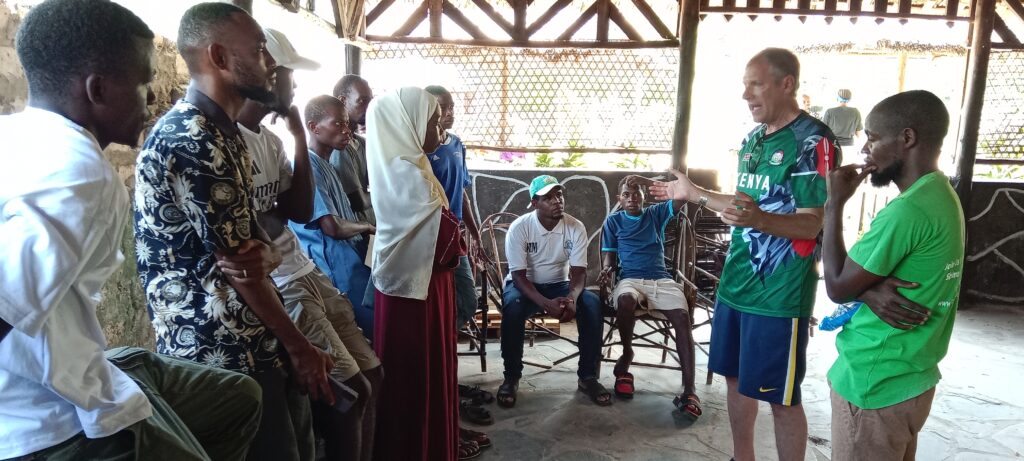
“If given the opportunity, I would fund an entire BMU area because it supports many species—octopus, turtles, fish and coral ecosystems together.”
What is emerging in Shimoni–Vanga is a model where conservation is no longer separate from livelihoods.
Women farming seaweed, youth protecting turtles, fishers restoring coral reefs and communities guarding mangroves are proving that local stewardship can generate both ecological and economic returns.
For many residents, the grants may be small, but their impact is reshaping how coastal communities view their natural resources.
And as marine pressures grow—from climate change to illegal fishing—the success of these community-led efforts may hold critical lessons for Kenya’s blue economy future.
CANCO Project Manager Richard Bemaronda is upbeat about the implementation of the GEF SGP funded projects saying their role as strategic partners started right from the time the groups applied for funding.
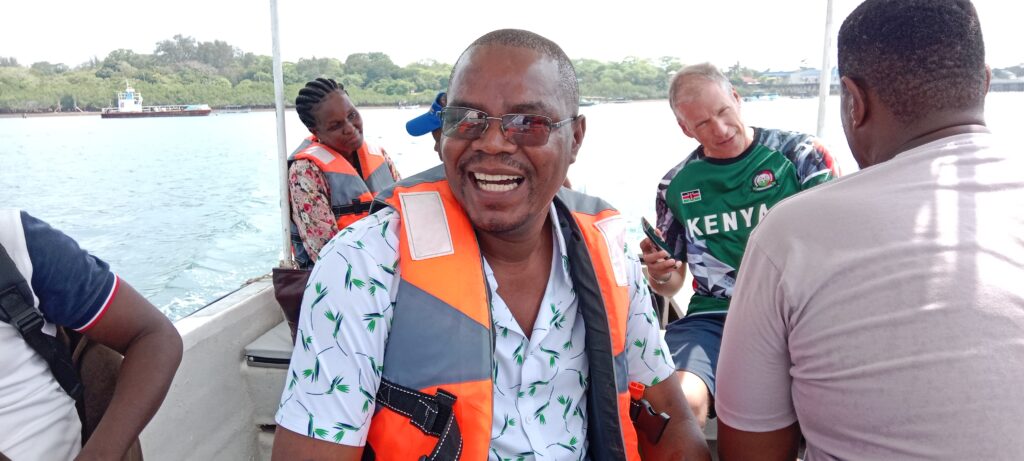
“We have grown with them therefore we understand all their strengths, weaknesses and even the challenges and this helps us to guide them throughout the projects implementation,” he said.
At CANCO, he said their role includes community sensitization, technical guidance, and coordination with local governments and agencies.
Before funding was disbursed, CANCO organized stakeholder meetings to ensure communities understood the focus areas for GEF support, especially climate change adaptation, biodiversity conservation, and sustainable fisheries. More than 80 groups applied, and 11 were selected for funding under GEF 7.
Some of the grantees include:
Jimbo BMU Biodiversity: Conserving seagrass habitats and improving community ecotourism
Mkunguni BMU Biodiversity: Establishment of a fisheries no-take –zone in Mkunguni co- management Area for improved Biodiversity conservation and enhance livelihoods
Shimoni Slaves Cave Biodiversity and community- based conservation of threatened ecosystems and Species
POKICOFA Biodiversity: Protection and Conservation of the Indian Ocean Biodiversity around River Ramisi Estuary.
Colobus Conservation Biodiversity and community- based conservation of threatened ecosystems and Species