
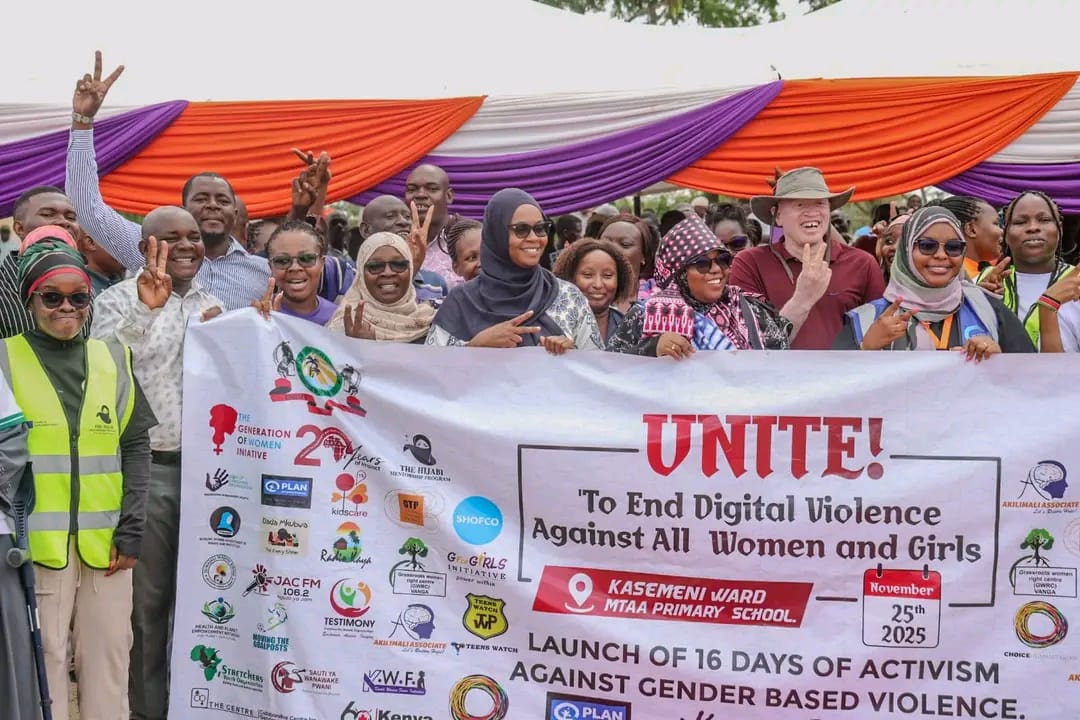
Kenyans, alongside activists and duty bearers, unite to demand an end to Gender-Based Violence and femicide, calling for stronger protection, accountability, and justice for survivors across the country | Photo By Jane Meza
When Susan Achieng Mitoh finally reached out for help, it should have marked the beginning of her safety. Instead, it became the prelude to her death.
The mother of two died on April 14, 2026, after allegedly enduring prolonged violence at the hands of her partner, Ainea Namiba, whom she had lived with for 15 years. According to relatives, the suspect attacked her in Magongo, Changamwe Constituency, stabbing her multiple times in the lower abdomen and right breast.
Her family says the warning signs had been visible for months and that earlier incidents had already been reported to authorities. Yet no meaningful intervention followed.
Now, as relatives mourn her loss, Susan’s death has become a painful symbol of a wider crisis unfolding across Kenya’s coastal region, where many women report abuse too late, institutions respond too slowly, and justice often comes only after lives have already been lost. “She tried to survive, but the system failed her,” said her sister, Emily Amitoh.
According to relatives, violence in Susan’s relationship had escalated long before the fatal assault. In one earlier incident, her husband allegedly burned her belongings. But when the matter was reported, family members say they were advised to reconcile instead of pursuing legal protection.
Women’s rights advocates warn that such responses can be deadly. Domestic violence, they argue, is still too often treated as a private family matter rather than a serious criminal offence requiring urgent intervention. The result is that survivors are frequently pushed back into the same environments that threaten their lives.
Susan eventually left the relationship and sought refuge with relatives after confiding in them about the abuse she had endured in silence. Like many survivors, her family says she concealed the violence for years while trying to protect the image of her marriage and shield her children from emotional turmoil.
Her husband reportedly asked to meet and talk. She agreed. Shortly afterwards, she was violently attacked and rushed to hospital in critical condition.
She was first taken to Port Reitz Hospital, but efforts to transfer her to Coast General Teaching and Referral Hospital faced delays due to lack of ICU space, according to Federation of Women Lawyers (FIDA Kenya) representatives in Mombasa.
“Attempts to transfer her to a higher-level facility were hampered by lack of intensive care capacity. After days of fighting for her life, Susan Achieng Mitoh died,” said Terry Mwongeli of FIDA Kenya.
Her death exposed not only the brutality of domestic violence, but also gaps within emergency healthcare systems meant to protect survivors.
Susan’s story mirrors the reality faced by many women across Kenya who endure abuse until it becomes unbearable.
FIDA Kenya says many survivors only seek help when violence becomes life-threatening.
“Many women endure abuse for months or years. They report when the violence becomes severe or when they fear they may be killed,” said a women’s rights advocate working with survivors in Mombasa.
According to FIDA, fear is often the reason for delay, fear of homelessness, loss of financial support, retaliation from abusers, stigma from relatives, and concern for children left caught in violent homes.
For many women, silence can appear safer than seeking help.
FIDA Kenya says its Mombasa office alone has already handled more than 15 serious GBV cases this year. “So far, we have more than 15 cases awaiting prosecution, and we are actively creating awareness in communities on matters of GBV,” said Jane Onyango, FIDA Kenya treasurer. “Violence can never be a solution to family conflict.”
Susan’s death is not the only tragedy that has shaken the Coast region in recent months.
On March 21, 2026, thirty-six year-old Elizabeth Nina was found murdered inside an unfinished building in Senti Kumi, Likoni. Investigators say she had been raped before being killed with a blunt object.
Outside the Coast General Teaching and Referral Hospital mortuary, grief quickly turned into outrage as relatives, residents and women’s rights defenders demanded justice. “My sister did not deserve to die like this,” said her sister Evelyn Kamani through tears. “Too many women are dying, and families are left crying.”
Days later, another body was discovered.
On April 25, 21-year-old Fedelis Chepchumba was found dead inside her boyfriend’s house in Timbwani, Likoni, three days after she had been reported missing. Postmortem findings showed she had been manually strangled.
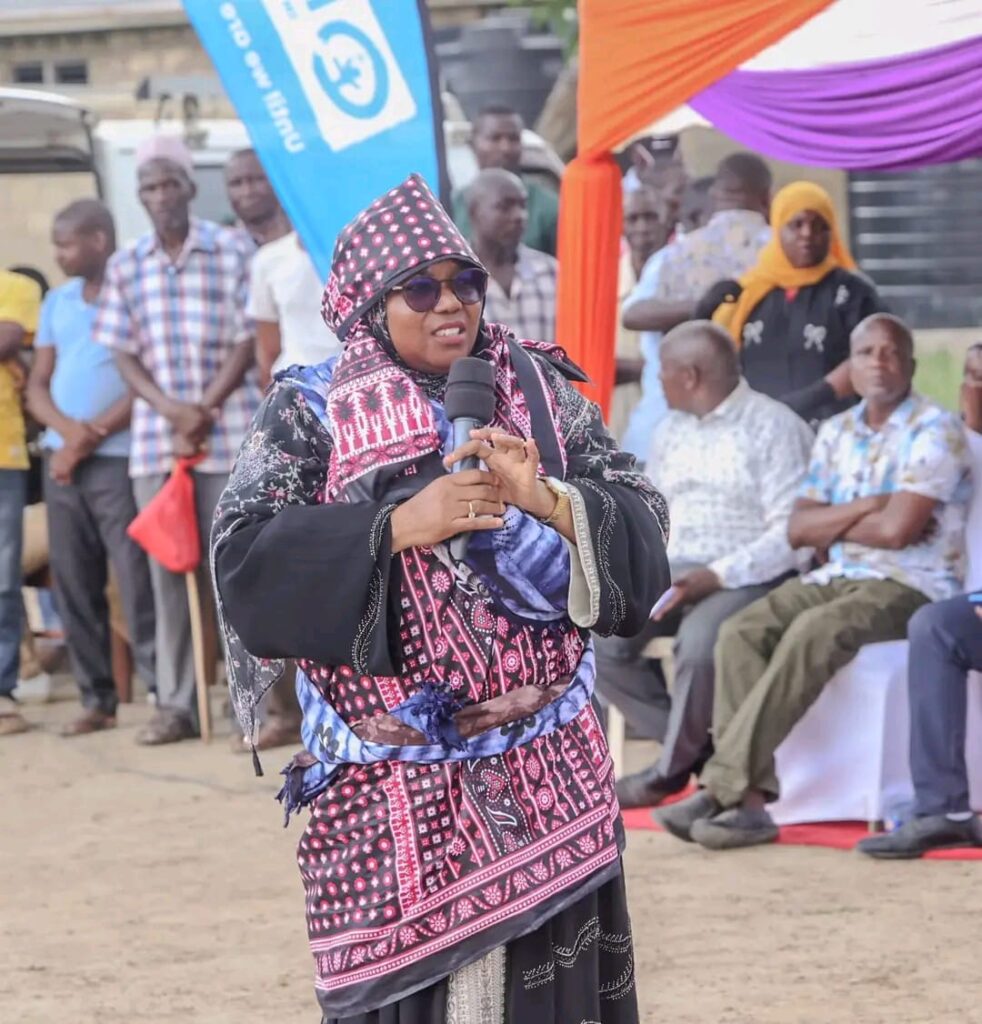
Likoni Sub-County Police Commander Joseph Kyalo Mutungi confirmed that investigations into the killings are ongoing. “Efforts to apprehend suspects linked to the recent murder incidents are at advanced stages following intelligence-led operations by the Directorate of Criminal Investigations and the National Police Service,” he said.
In neighbouring Kwale County, another survivor, whose identity is being withheld for security reasons, recounted a horrifying attack that reflects the brutality many women continue to face in silence.
Speaking in visible pain, the survivor described how armed men ambushed her at night, cut her with machetes, threatened her with knives and forced her onto a motorcycle before driving her deep into a forest. “There, they ordered me to kneel, stripped me naked, gang raped me and beat me as if they wanted to kill me,” she said.
She survived, but now lives with trauma while seeking justice. A local leader who requested anonymity said the community could not tolerate rape, violent robbery and attacks against women.
“We cannot normalize this kind of brutality,” he said. “Those responsible must be arrested and taken to court. There should be justice, not mob retaliation.”
Together, the stories of Susan, Elizabeth, Fedelis and countless unnamed survivors reveal the human face behind Kenya’s growing gender-based violence crisis. Behind closed doors, many women continue to suffer silently while systems meant to protect them struggle to respond effectively.
A 2016 study by the National Gender and Equality Commission (NGEC) found that survivors and their families incur an average medical cost of KSh16,464 per GBV case. Serious injuries can lead to productivity losses estimated at KSh223,476, while deaths linked to GBV cost families and the economy approximately KSh5.8 million in lost lifetime productivity. The report further found that survivors spend additional money on transport, police reporting and legal follow-up while pursuing justice.
Chief Justice Martha Koome has repeatedly warned that GBV is no longer a private family matter but a national emergency requiring urgent institutional response. In recent judiciary forums, she called for survivor sensitive courts, faster case handling and stronger accountability for perpetrators.
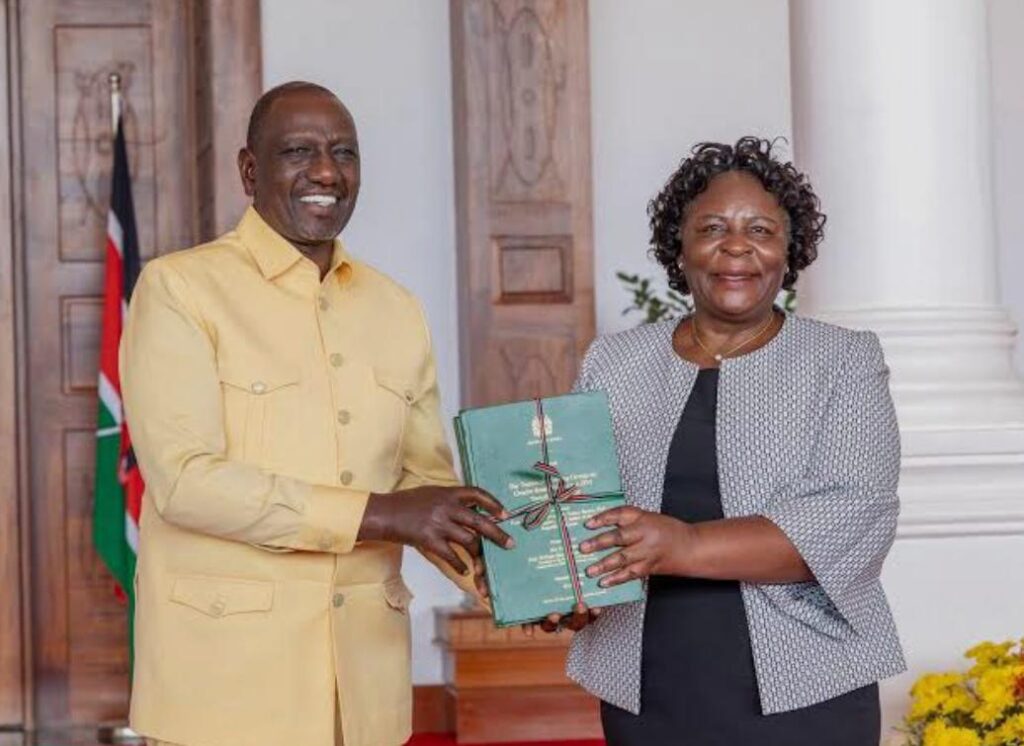
Former Deputy Chief Justice Dr Nancy Baraza, who chaired the Presidential Technical Working Group on Gender-Based Violence and Femicide, calls on President William Ruto to declare GBV and femicide a national crisis.
Since taking up the role in January 2025, Baraza has warned that the rising cases of violence against women and girls reflect deep systemic failures in protection, prevention, and access to justice, particularly for survivors in marginalized and rural communities.
She has further emphasized the need for stronger institutions, increased budgetary allocation, and survivor-centered response mechanisms to address the growing crisis.
The NGEC has similarly described GBV as one of Kenya’s most persistent human rights violations, disproportionately affecting women and girls.
In Mombasa County, the numbers paint a disturbing picture.
According to the county’s Costed Gender-Based Violence Strategic Plan (2022–2027), cases reported in health facilities rose sharply from 420 in 2018 to 1,865 in 2021. The county acknowledges that violence takes many forms including rape, physical assault, emotional abuse, economic violence, child abuse and intimate partner violence.
It also identifies deeply rooted social norms, including what local experts describe as the “Mwenye Syndrome”, the belief that men own women and have ultimate authority over them.
At the center of Mombasa’s response system is the Gender-Based Violence Recovery Centre (GBVRC) at Coast General Teaching and Referral Hospital.
Established in 2007, the facility was designed as a one stop center where survivors can receive emergency treatment, counselling, medical documentation, police referrals and legal support under one roof.

Since its establishment, the centre has handled thousands of survivors. Records indicate that between 2007 and 2019, the facility registered more than 8,000 survivors, averaging nearly 20 cases every week. Between 2017 and 2023 alone, it handled 3,122 survivors, of whom 2,738 were girls and women.
In nearly 89 per cent of the cases, the perpetrators were known to the victims, often relatives, neighbours, spouses or trusted individuals.
Yet reaching the hospital does not always guarantee justice.
Data from the recovery centre shows that while 93 per cent of survivors referred from the hospital reached police stations, only 62 per cent of the cases were formally recorded and filed.
That gap exposes one of the country’s hidden failures, many survivors report violence, but their cases disappear before prosecution. Human rights defenders say missing files, intimidation, family pressure, delayed investigations, poor evidence handling and pressure for out-of-court settlements continue weakening GBV cases.
Court processes themselves can become another form of trauma. Advocate Terry Mwongeli says survivors often face repeated adjournments, threats from abusers, pressure from relatives to reconcile, and lack of transport fare to attend hearings which many eventually abandon their cases altogether.
Despite the growing number of femicide and GBV cases across the Coast region, activists say both Mombasa and Kwale counties still lack sufficient dedicated budget allocations for comprehensive GBV prevention, survivor shelters and emergency protection systems.
Human Rights groups argue that although counties continue launching policies and awareness campaigns, frontline services remain overstretched and underfunded, relying heavily on donor support and civil society organizations.
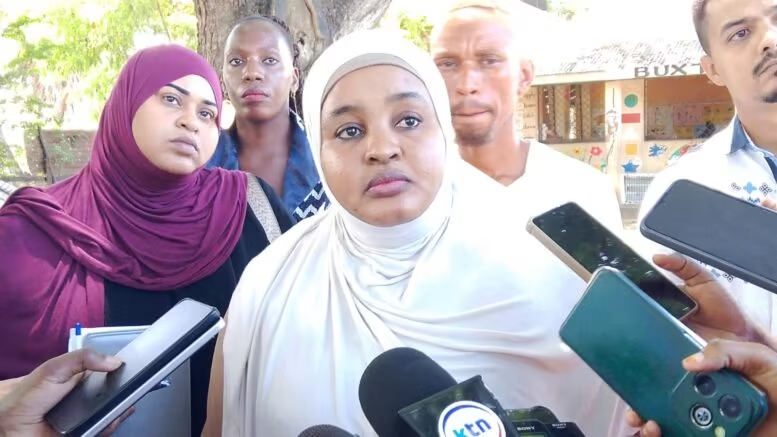
In Mombasa, campaigners cite limited forensic support, shortage of specialized response personnel and lack of fully funded shelters as major gaps weakening survivor protection while in Kwale, survivors in remote villages still travel long distances to reach police stations, hospitals or courts despite recent progress through mobile courts introduced in Msambweni and Lunga Lunga.
Kwale County has intensified efforts to combat GBV through the Kwale County Sexual and Gender-Based Violence Prevention and Protection Act and broader community awareness programmes. Reported GBV cases in the county rose by 23 per cent between 2022 and 2024, a trend officials partly attribute to increased awareness and reporting.
But activists warn the true scale of violence remains hidden.
Human rights groups including HURIA Africa and Network for Adolescent and Youth Africa (NAYA) Kenya say many survivors still avoid police stations because of fear, stigma, dependency and reliance on traditional “Maslah” settlements handled outside formal justice systems.
“Too many survivors remain on the side of those who do not access justice,” the organisations warned, calling for stronger coordination between hospitals, police and courts.
Kwale Gender Officer Nelly Amoite says harmful traditional settlements continue undermining justice for survivors. “Anyone who harms a child or a woman will be held accountable. We want our girls in classrooms, not trapped in early marriages,” she said.
Kwale Police Commander Reginald Omaria has similarly warned residents against resolving GBV cases privately. “Such settlements deny victims justice and protect offenders,” he said.
At the national level, concern over rising GBV cases has now reached Parliament. During a consultative forum in Machakos County on March 27, 2026, the Senate Committee on Labour and Social Welfare raised concerns over funding gaps affecting GBV response systems, child protection and family support programmes.
Committee Chairperson Julius Murgor warned that underfunding continues weakening protection systems, while Cabinet Secretary Hanna Cheptumo cited delays affecting child protection services.
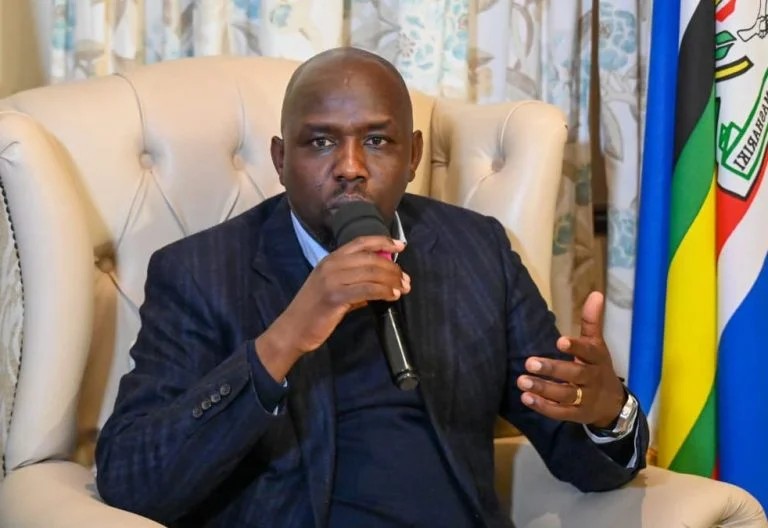
Interior Cabinet Secretary Kipchumba Murkomen also recently reaffirmed government commitment to tackling GBV, announcing deployment of additional officers to strengthen response systems. But for many families burying loved ones, such promises feel painfully distant.
FIDA Kenya argues that laws, policies and taskforces mean little without shelters, emergency care, functioning investigations and survivor protection on the ground.
For Susan Achieng Mitoh’s family, those failures are no longer theoretical, they are personal. And unless systems begin protecting survivors before violence turns fatal, activists warn that more women will continue dying behind closed doors while families search for justice that comes far too late.