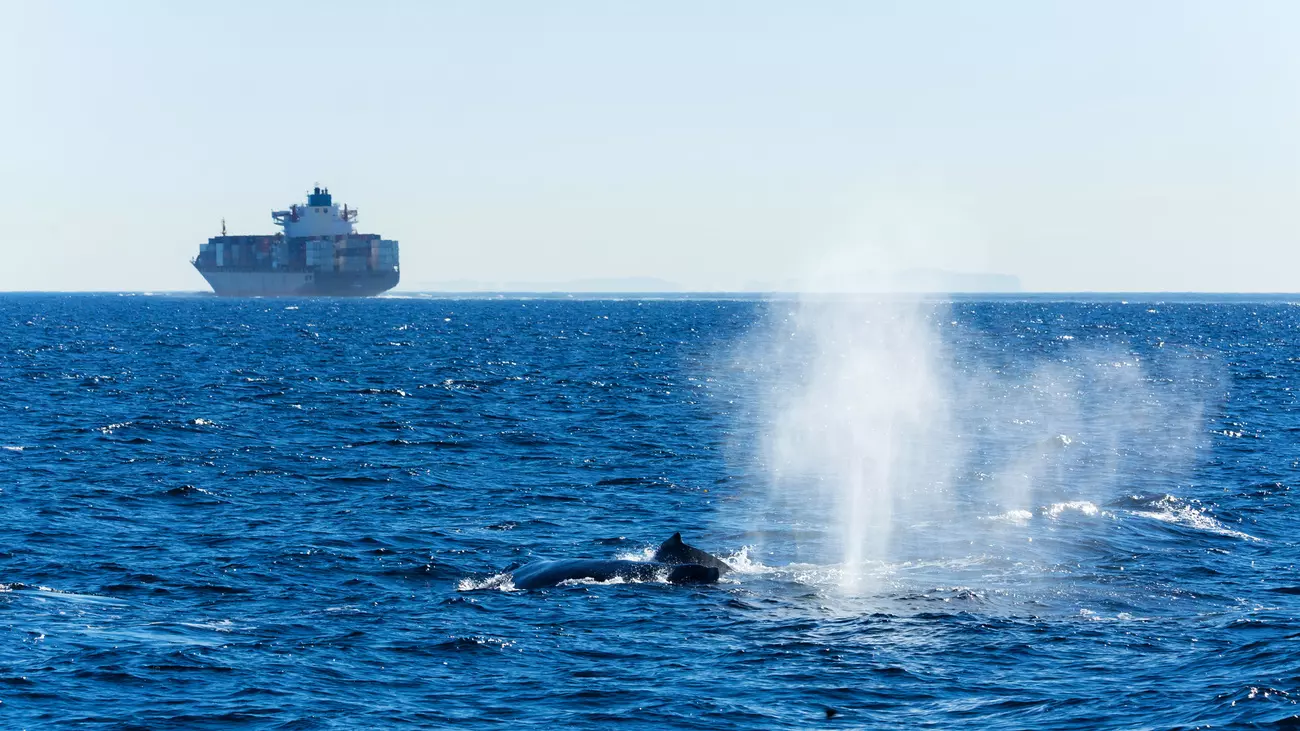
Whale surfacing with cargo ship in the background| Photo Courtesy of Ifaw
When an elder from Kiunga in Lamu County, told scientists that they would regularly come across rare marine species like dugongs in their youthful days, it signaled something far critical.
Elderly fishers along the Kenyan Coast are speaking out pointing out the many changes they have witnessed in the marine space. The ocean is too noisy and scientists and other players are joining the conversation.
Lillian Mulupi, IFAW‘s Marine Conservation Lead for East Africa recalled an elderly fisherman she met in Kiunga in 2009.
“He told me that as motorized boats became more common, dugongs were disappearing from the area because they dislike noise,” she says.
Today, standing on the shores of the Indian Ocean, it is difficult to imagine that beneath the undulating waves lies a world alive with sound.
Whales sing across hundreds of kilometres while dolphins communicate through whistles and clicks. Sea turtles navigate ancient migratory routes using natural underwater signals, while fish rely on sound to find food, avoid predators and locate mates.
Sadly, as it is emerging, the underwater orchestra is increasingly being muzzled.
Unlike plastic bottles strewn on sandy beaches or floating on the sea or even oil slicks staining the coastline, underwater noise pollution is invisible. It cannot be photographed or collected during beach clean-ups. Yet scientists now describe it as one of the fastest-growing threats to marine biodiversity.
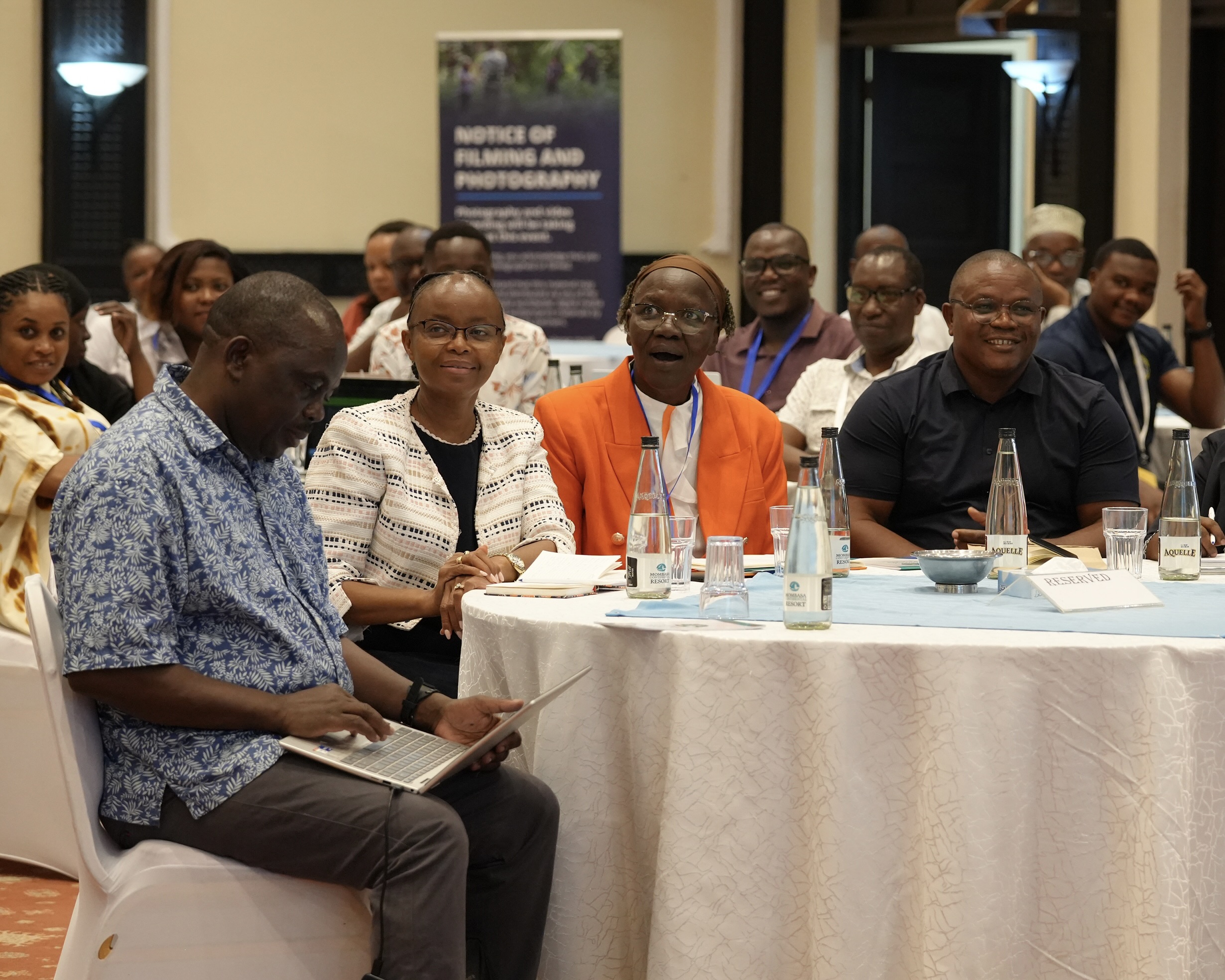
It is a threat that is finally getting some attention. It was one of the issues that took centre stage during the 11th Our Ocean Conference held in Mombasa, Kenya, where governments, conservation organizations, scientists and policy experts called for greater attention to an environmental challenge that has remained largely unheard.
Invisible Pollution with Visible Consequences
One of the discussions was led by the International Fund for Animal Welfare (IFAW) through a special session titled “Elevating Ocean Noise Pollution—From Awareness to Action in the Western Indian Ocean.”
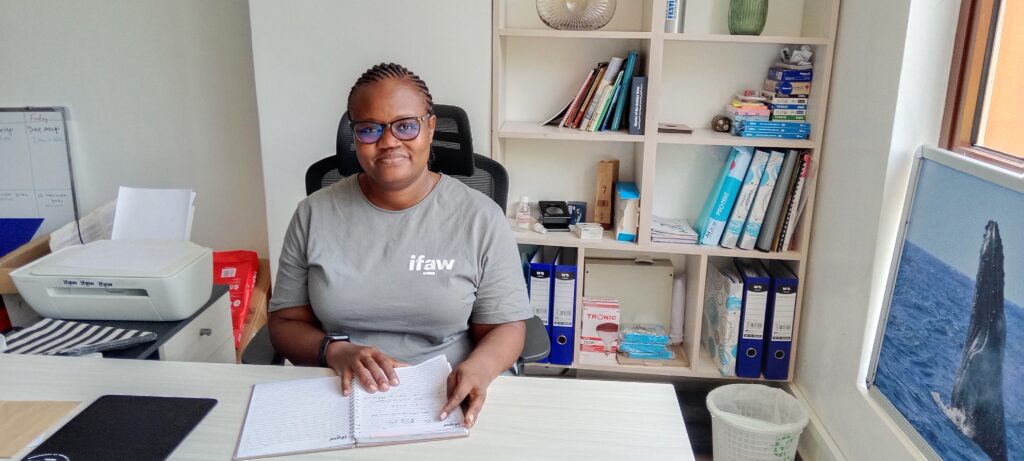
For Mulupi, underwater noise is one of the most overlooked environmental threats despite its profound implications for marine ecosystems and coastal livelihoods.
“Marine animals such as dolphins, whales and even sea turtles communicate through sound,” she explains. “They use sound to find mates, search for food, avoid danger and navigate. When we create a noisy ocean, we interrupt all these natural processes.”
The consequences ripple far beyond wildlife.
“When marine ecosystems are disrupted, fisheries are affected. Communities along our coast depend heavily on fish for food security and livelihoods. Protecting the ocean’s natural soundscape is therefore not just about wildlife, it is also about people.”
Louder Ocean
Commercial shipping is today the largest source of underwater noise worldwide.
Nearly 90 percent of global trade is transported by sea, meaning thousands of ships are constantly moving across the world’s oceans. Their engines and propellers generate low-frequency sounds that travel vast distances underwater.
Shipping is not the only source. Offshore oil and gas exploration, port construction, dredging, seismic surveys and increasing maritime traffic all contribute to a steadily noisier ocean.
According to Sophia Vale, an Ocean Policy Analyst with the US-based Environmental Investigation Agency (EIA), the problem extends throughout the entire marine ecosystem. Sophia spoke in Mombasa while attending the 11th Our Ocean Conference.

“People often associate underwater noise with whales and dolphins because they are known as the singers of the ocean,” she said “But the reality is that underwater noise affects the entire food web—from whales and dolphins to fish, seagrass and even plankton.”
She added: “The sounds generated by human activities mask the biological sounds marine species depend upon as animals struggle to communicate.”
Vale said migratory species lose their orientation while predators and prey fail to detect one another. “Breeding and feeding behaviours become disrupted.”
Unlike many environmental threats, however, underwater noise offers one encouraging advantage.
“If we reduce underwater noise,” said Vale, “marine life can respond almost immediately. The recovery begins as soon as the sound levels drop.”
Local Communities Heard It First
Long before underwater acoustics became a scientific discipline, coastal communities had already begun noticing changes.
According to local fishers, dugongs were still occasionally encountered by those using traditional sailing boats, while those travelling in fast motorized boats rarely saw them.
“It demonstrated that underwater noise is not just a scientific issue,” said Mulupi. “Communities are already experiencing its effects.”
That realization has shaped IFAW’s conservation approach.
Instead of designing projects in boardrooms, the organization now works with communities to co-design conservation initiatives based on local experiences and knowledge.
For Matt Collins, IFAW Senior Director, Policy the starting point remains local communities.
“We need to spend time with communities to understand the environmental changes they are witnessing and how they are responding,” he said.

He acknowledged that reducing noise from small boats will not be easy because motorized vessels remain the primary mode of transport for many coastal communities.
“The challenge is finding practical, affordable ways of promoting quieter vessels without compromising people’s livelihoods.”
A Growing Concern for the Blue Economy
Ironically, attention to underwater noise comes at a time when many countries, including Kenya, are expanding investments in the blue economy.
New ports, shipping routes, offshore energy projects and maritime infrastructure promise economic growth.
Yet scientists warn that development must not come at the expense of healthy marine ecosystems.
According to Dr Nina Wambiji, marine scientist and Vice President of the Western Indian Ocean Marine Science Association (WIOMSA), underwater noise remained largely ignored for decades.
“When discussions on marine conservation began years ago, the focus was on security issues. Even plastic pollution had not yet received the attention it has today. Noise pollution was far down the priority rungs.”
Today, however, she believes the issue can no longer be overlooked.
“The blue economy includes fisheries, ports, shipping, bridges, offshore drilling and many other developments. Beneath all these activities there is noise, and we must understand its impact on marine ecosystems.”
Dr Wambiji is calling for coordinated research involving scientists, universities, the Kenya Maritime Authority, the Kenya Marine and Fisheries Research Institute, fisheries agencies and local communities.
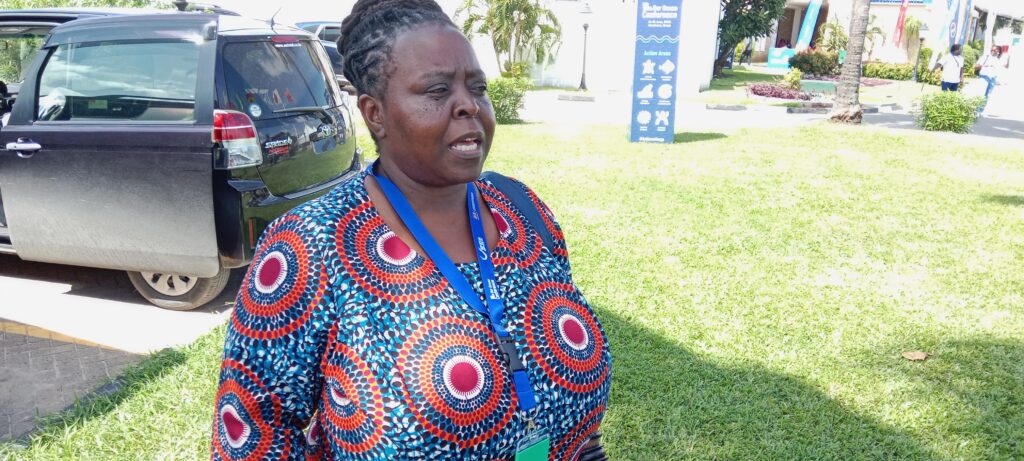
One immediate priority is establishing baseline data through affordable underwater acoustic monitoring systems placed at selected landing sites.
“We cannot manage what we do not measure and research must begin now,” she said.
Science Meets Policy
One positive thing that suggests progress in the marine space is that international momentum to tackle underwater noise is steadily building.
In 2025, governments launched the High Ambition Coalition for a Quiet Ocean during the 10th Our Ocean Conference in Nice, France.
Representing the Canadian Government, Kerry Max, Deputy Director for Partnering for Climate under Global Affairs Canada, says the coalition has already attracted 38 member countries.
The coalition focuses on four priority actions:
- Advancing policies to design and operate quieter ships through the International Maritime Organization.
- Integrating natural soundscapes into marine protected area planning.
- Reducing vessel impacts on sensitive marine wildlife.
- Supporting research, data sharing and capacity building.
Interestingly, he said, quieter ships are not just better for marine life.
“They are also more fuel efficient,” Max explained. “Ship redesign can improve operational efficiency while reducing underwater noise making it a win-win.”
The challenge, however, lies in persuading the shipping industry to move faster.
“Many companies are waiting for mandatory international standards before making significant investments,” he said.
The Western Indian Ocean Has an Opportunity
Compared to heavily industrialized shipping corridors elsewhere in the world, the Western Indian Ocean remains relatively quiet.
Experts believe this presents a rare opportunity.
“We still have time,” said Mulupi.
“Our region has not yet reached the extreme levels of underwater noise experienced elsewhere. If we act now, we can prevent the problem before it becomes much worse.”
That urgency has grown following increased shipping activity in the region.
Since tensions escalated in the Middle East, including the conflict involving Israel and Iran, increased numbers of cargo vessels have reportedly been rerouted through the Western Indian Ocean to ports such as Mombasa and Lamu.
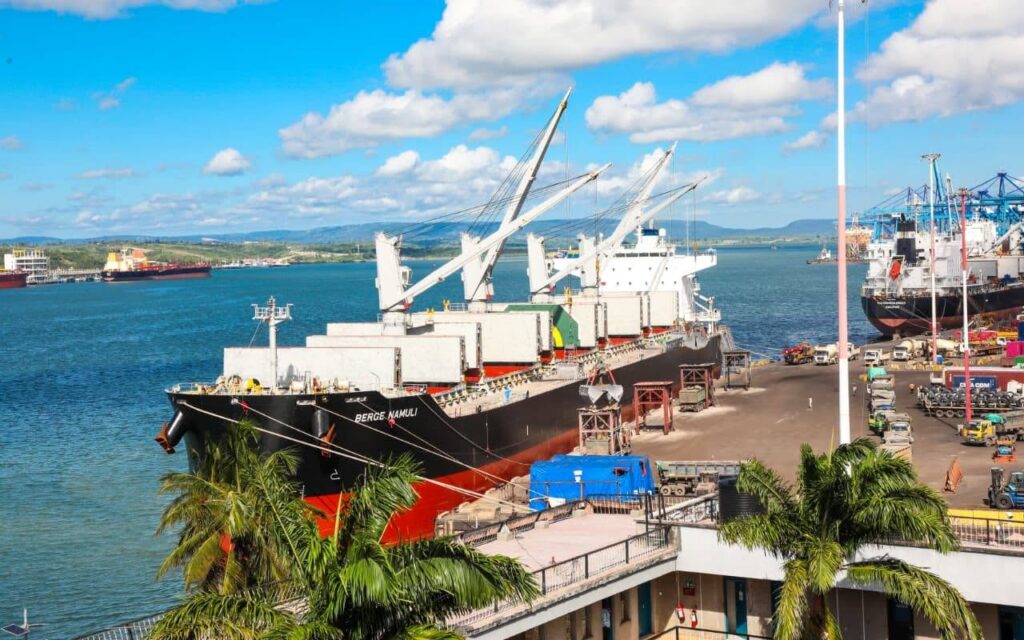
While this has created new economic opportunities, conservationists warn that increased vessel traffic could further intensify underwater noise in ecologically important marine habitats.
From Awareness to Action
Participants at the Our Ocean Conference agreed that awareness alone is no longer enough.
Dr Wambiji proposes establishing a national working group before expanding collaboration across the Western Indian Ocean region.
“The initiative would bring together scientists, government agencies, Beach Management Units, conservation organizations and universities to coordinate research, monitoring and policy responses.”