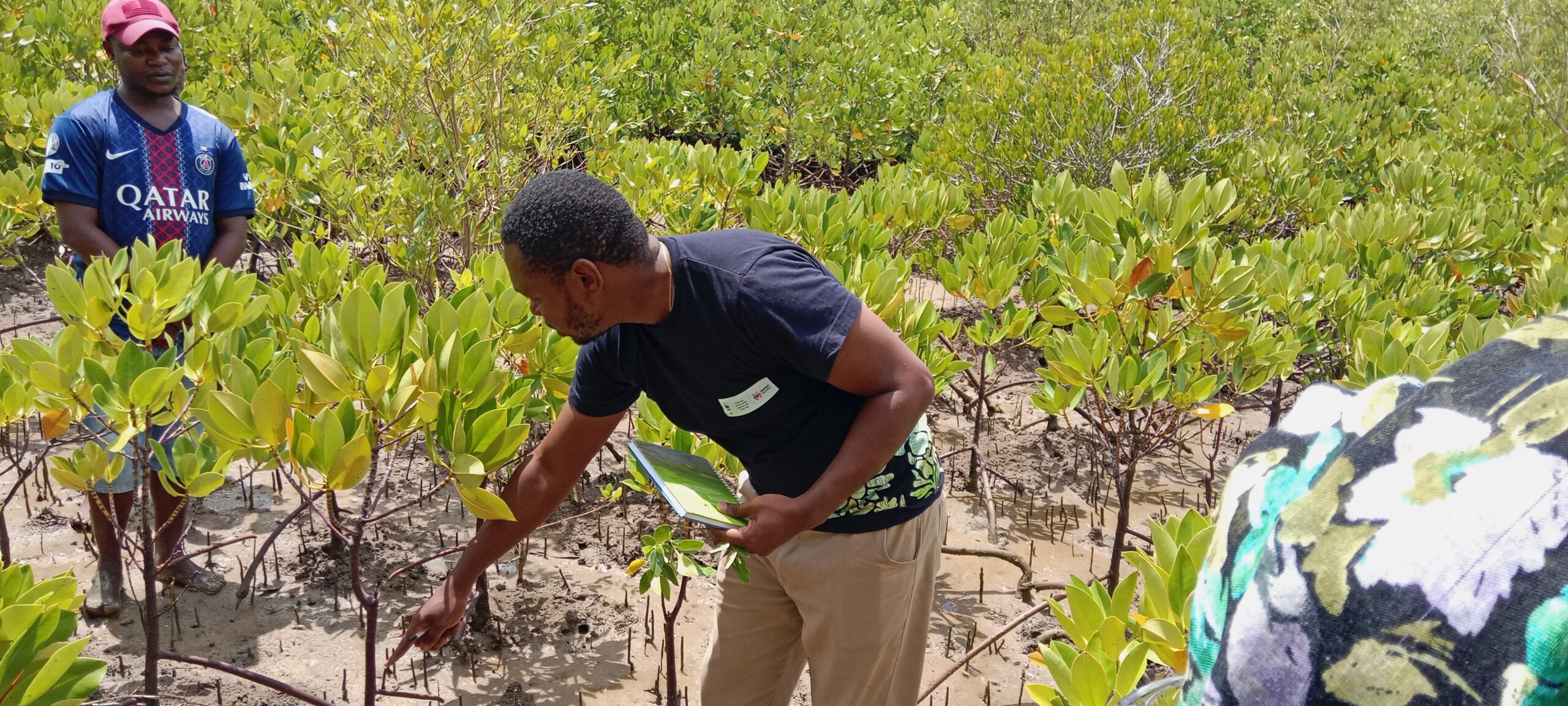
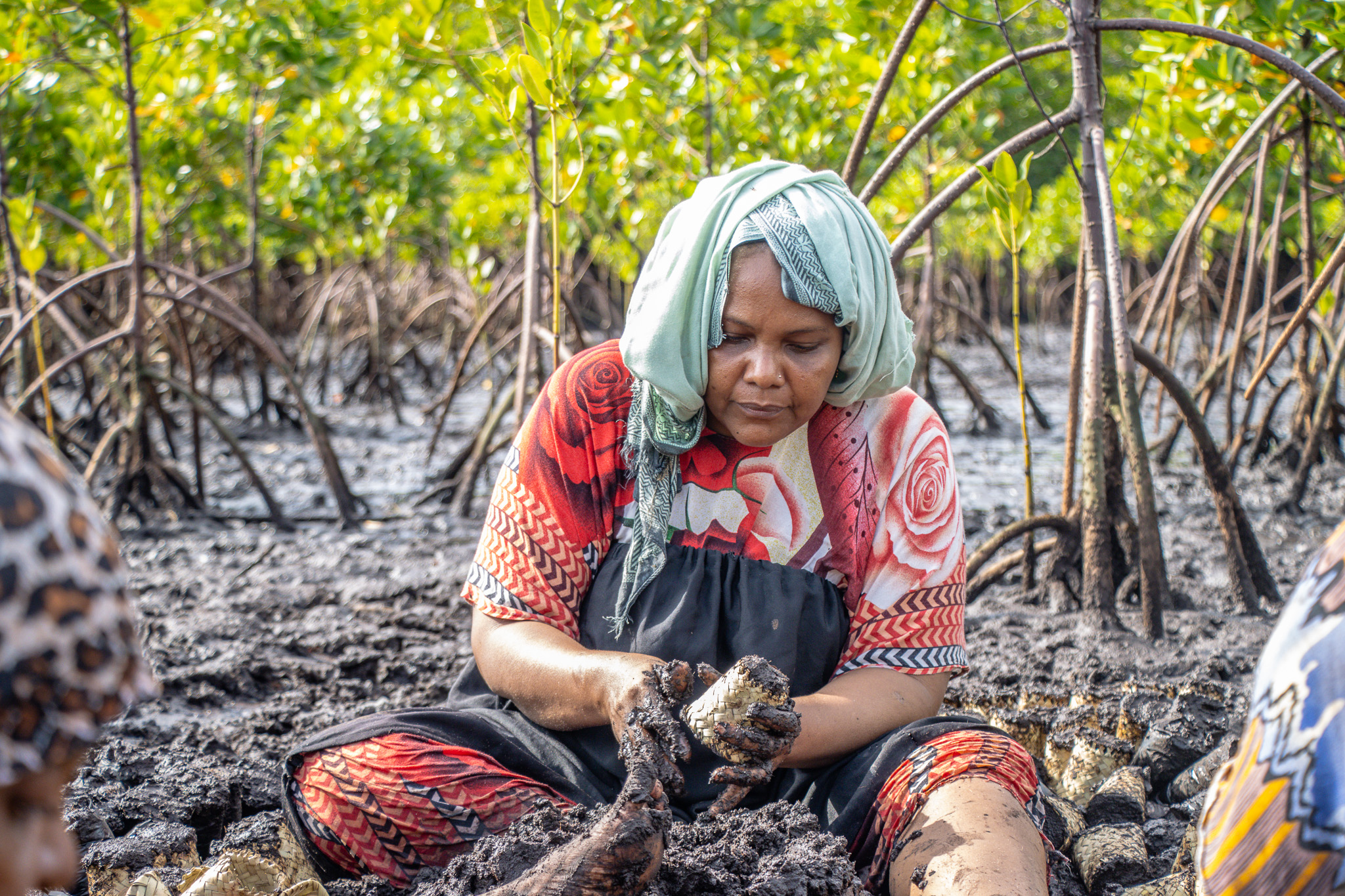
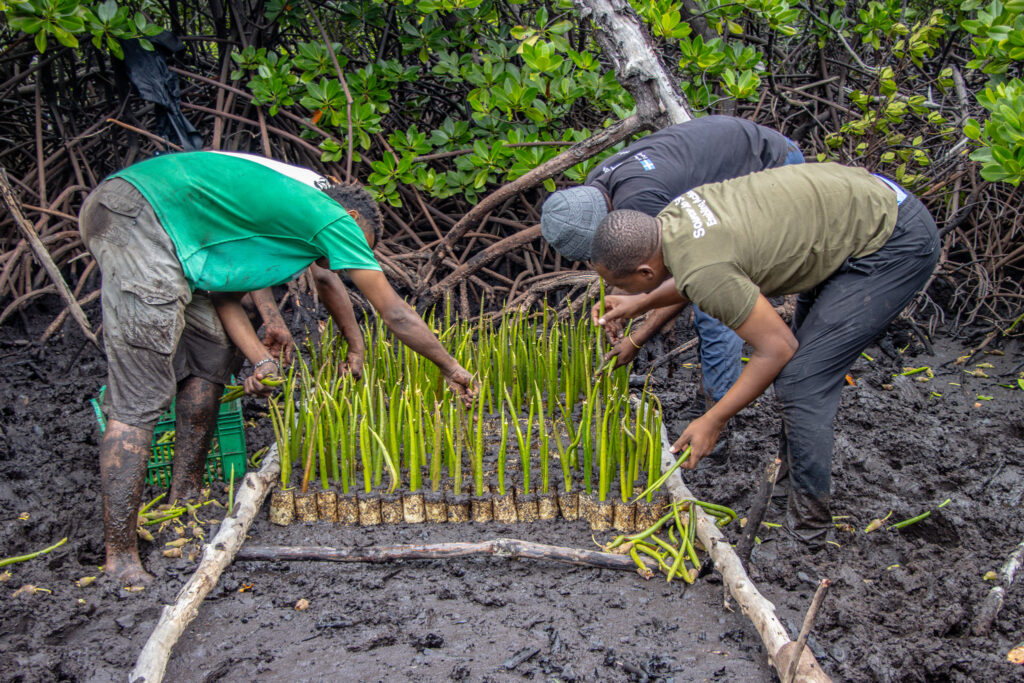
A woman from Pate Kwabagua preparing the hapahapa pots for mangrove seedlings under the Pate Resources and Tourism Initiative (PRATI), with support from Wetlands International Eastern Africa |Photo by Wetlands International Eastern Africa
On the far-flung shores of Pate Island in Lamu County, the ocean is more than a backdrop; it is life itself. Generations have fished its creeks, harvested crabs, and relied on mangroves for wood, medicine, and protection against natural disasters such as storms. But in recent decades, this relationship with the ocean has come under severe strain. Expanding human needs, coupled with environmental pressures, have tested the resilience of coastal communities and the ecosystems they depend on.
Kenya has been steadily positioning itself as a leader in the blue economy, tapping into the vast potential of its 600 km coastline and the wider Western Indian Ocean region. From shipping and tourism to sustainable fisheries and marine conservation, the potential for new livelihoods, improved food security, and climate resilience is immense. Yet, at the local level, these opportunities are often shadowed by real challenges like overfishing, mangrove destruction, marine pollution, and the impacts of climate change.
It is against this backdrop that the story of the Pate Resources and Tourism Initiative (PRATI), with support from Wetlands International Eastern Africa, stands out as a living example of how communities can actively shape a sustainable blue economy while safeguarding their heritage.
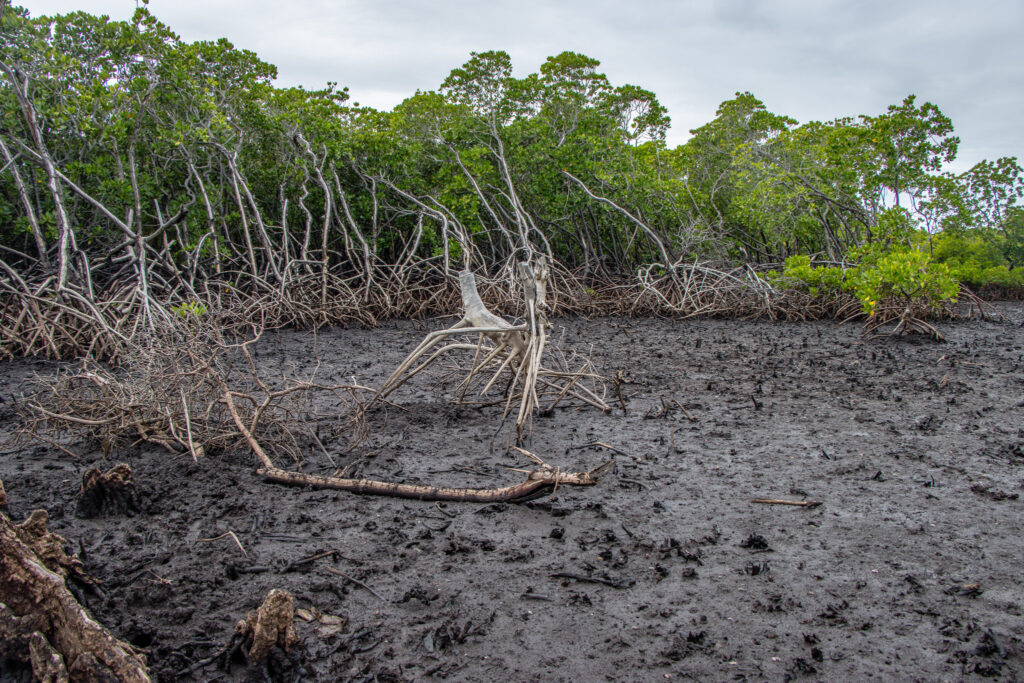
In Kwabagua, years of cutting mangroves and burning them in limestone kilns had stripped the shoreline bare. The loss was not just ecological but deeply personal. Mangroves are nurseries for fish, buffers against erosion, and vital sources of daily livelihood. Their disappearance meant declining fish catches, degraded land, and the loss of a protective barrier against rising seas. Guided by the Community Based Ecological Mangrove Restoration (CBEMR) approach, PRATI began by assessing the degraded sites. In some areas, natural regeneration was still possible, but in Kwabagua and other several sites the damage was too severe. There were no mature mangroves nearby to supply seed, and despite intact tidal flows, the ecosystem could not recover on its own.
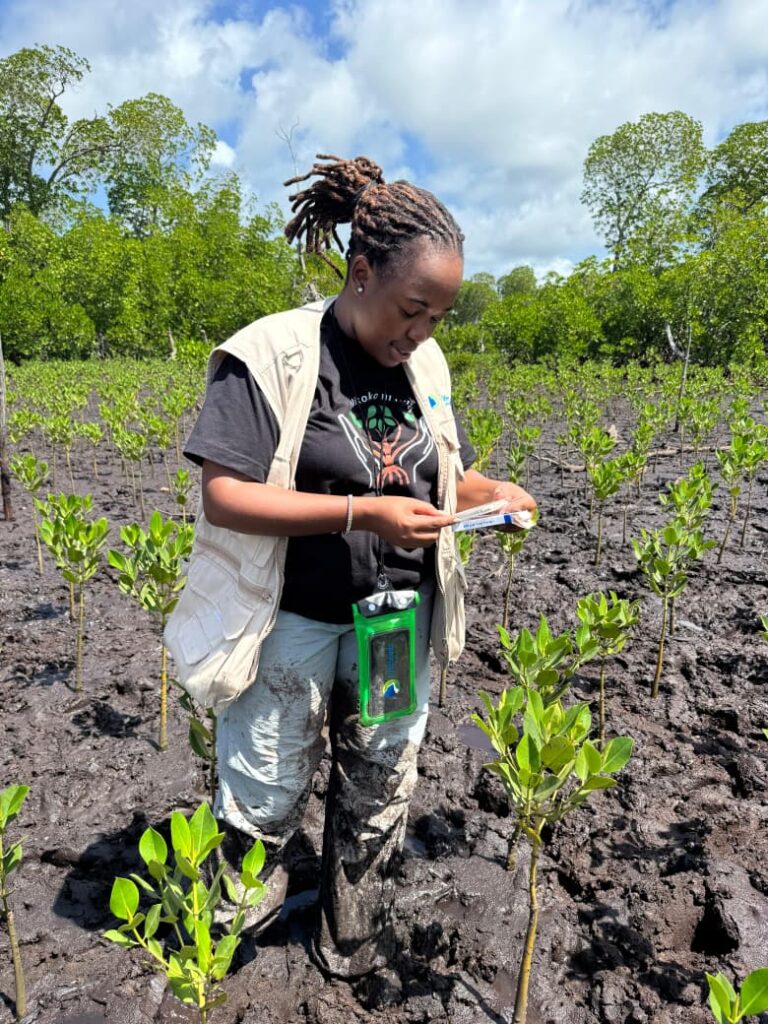
This is where assisted planting became necessary. Rather than planting for the sake of it, the decision was a targeted intervention to jumpstart recovery in areas where nature could not regenerate naturally. With support from Wetlands International Eastern Africa, PRATI members planted 5,000 propagules, carefully placed in sites where natural regeneration could not take place. Already, these young mangroves are stabilising the shoreline, improving soil conditions, and creating habitat for fish and crabs to return.
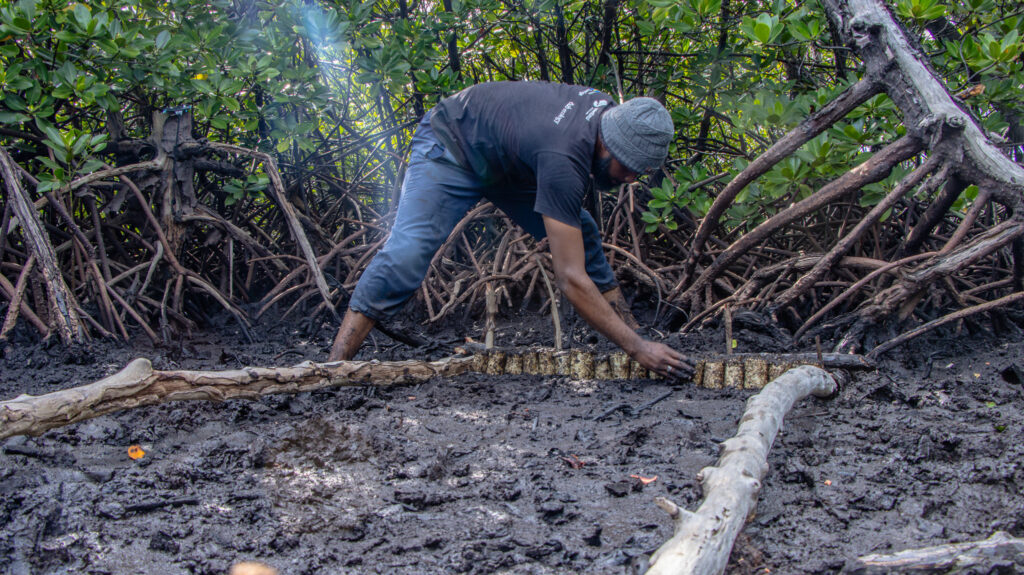
Building on this progress, PRATI has established a community-led mangrove nursery capable of producing an additional 5,000 seedlings. Using locally crafted hapahapa pots, biodegradable handwoven planters made from natural materials, the nursery ensures a steady supply of healthy seedlings for future restoration. More than just a seed source, it has become a place of community pride and youth engagement, where people learn conservation by nurturing seedlings with their own hands.
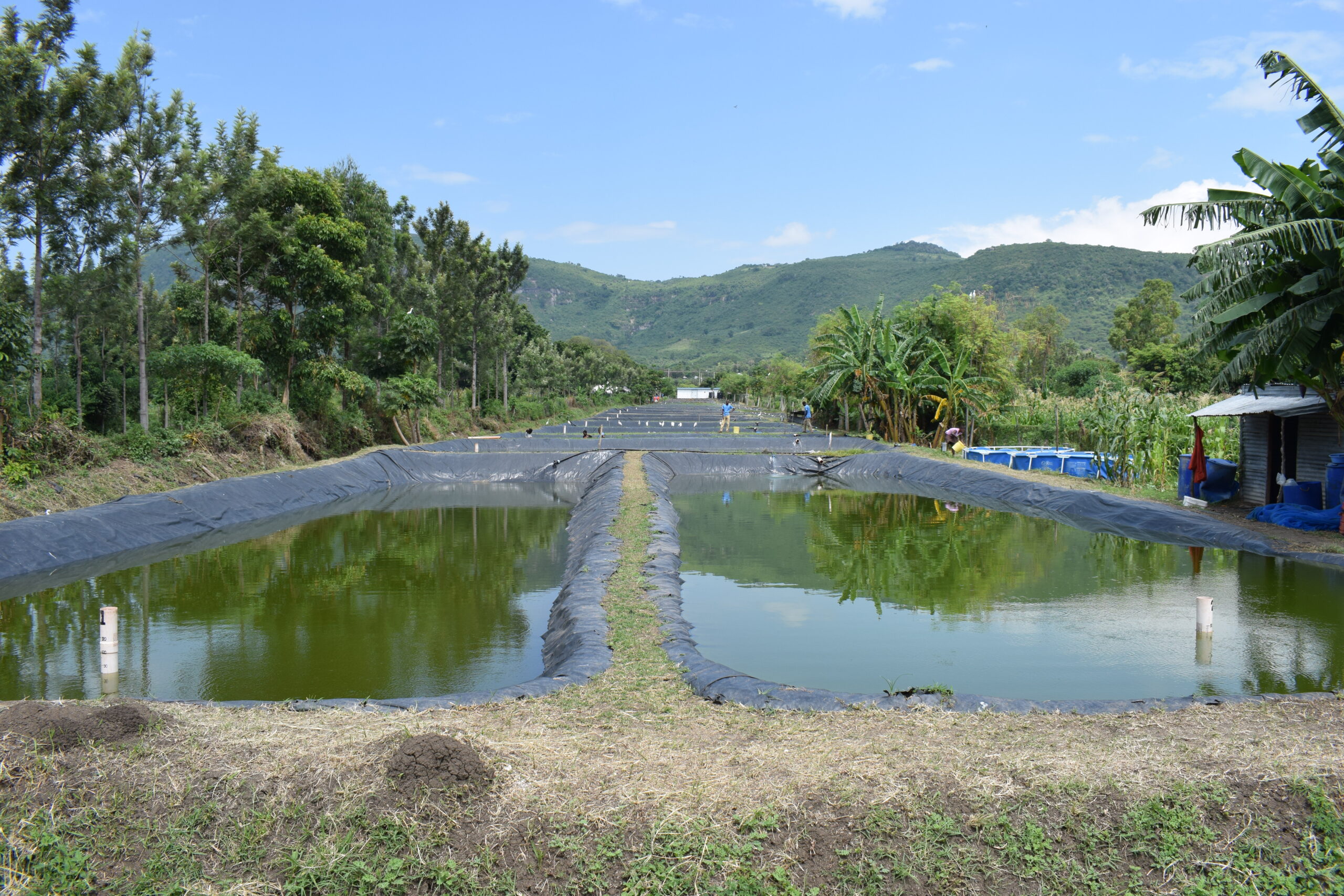
But the work does not stop there. Building on restoration, PRATI, with technical and financial support from Wetlands International Eastern Africa, has expanded into sustainable crab fattening. By rearing juvenile crabs in pens until they reach market size, families can earn income without depleting wild stocks. The initiative has created alternative livelihoods and broadened economic opportunities for the community.
Alongside this, the group is actively engaged in beekeeping and plastic recycling. The pristine mangrove channels and beaches of Pate are increasingly threatened by marine debris, much of it being plastics carried by currents or discarded locally. PRATI members now collect and sell plastics to Flipflopi, who in turn repurpose them, reducing pollution while generating value from waste. These efforts not only safeguard marine habitats but also strengthen the island’s role in Kenya’s circular economy vision. Through training and support from Wetlands International Eastern Africa, PRATI also scaled up its beekeeping initiative and later established a community training centre. Here, members manage hives, produce quality mangrove honey valued for its unique flavour and medicinal qualities, and train others.
For Wetlands International Eastern Africa, supporting PRATI is part of a broader mission: ensuring that ecosystems and communities thrive together. Across the Western Indian Ocean, Wetlands International Eastern Africa works on mangrove restoration, sustainable fisheries, climate resilience, and advocacy, bridging local action with regional and global policy. “Pate’s story shows that conservation and livelihoods can go hand in hand,” explains Louisa Chinyavu, Regional Programme Manager at Wetlands International Eastern Africa. “By restoring mangroves and supporting sustainable enterprises, we are not only protecting biodiversity but also securing the economic future of coastal communities.” Wetlands International Eastern Africa also emphasises that such community-led models are critical for achieving Kenya’s national commitments, from the National Blue Economy Strategy to global targets under the Global Biodiversity Framework and the Sustainable Development Goals.
Still, challenges remain. Climate change brings rising sea levels, unpredictable rainfall, and stronger storms, all of which threaten fragile coastal ecosystems. Market access remains limited; while honey and crab fattening offer promise, communities often struggle to connect to larger markets without intermediaries. Policy and enforcement gaps allow unsustainable mangrove cutting and destructive fishing practices to continue in some areas. Youth unemployment remains high, and while conservation offers opportunities, scaling these initiatives to reach more people requires consistent investment.
Kenya’s blue economy is often discussed in terms of shipping, ports, offshore energy, and large-scale investments. While these sectors are undeniably important, the lived reality on Pate Island reminds us that the blue economy is equally about small-scale, community-led innovations. It is about ensuring that fishermen can still cast their nets tomorrow, that young people find purpose in protecting their environment, and that ecosystems like mangroves, often called “walking trees,” continue to store carbon, buffer storms, and sustain marine life.
On Pate Island, change is visible and tangible. Seedlings nurtured in hapahapa pots are now thriving in once-barren creeks. Families are earning from honey and crabs raised sustainably. Plastics once scattered along the shoreline are being collected and reused. And, perhaps most importantly, the sense of hope and agency has returned.
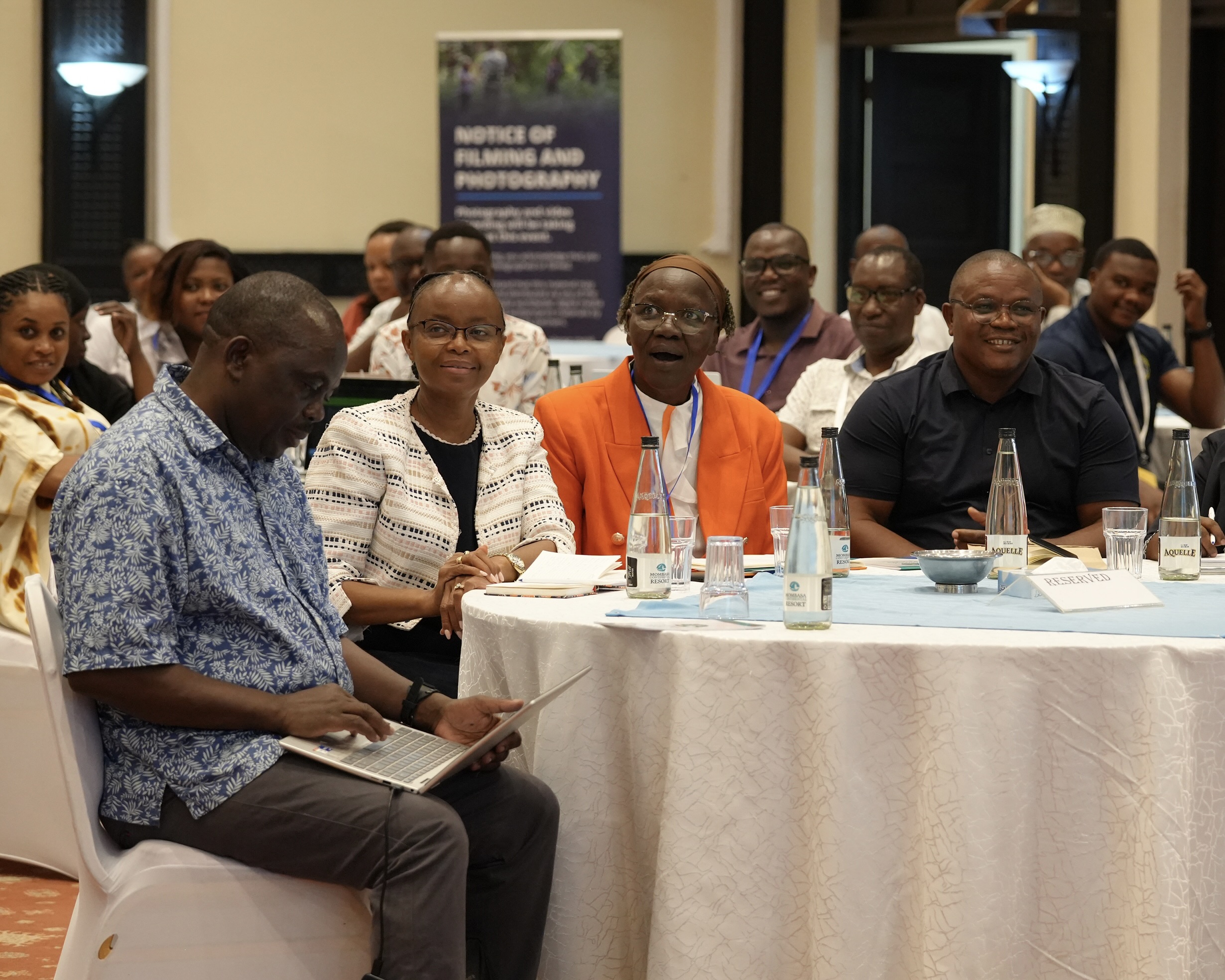
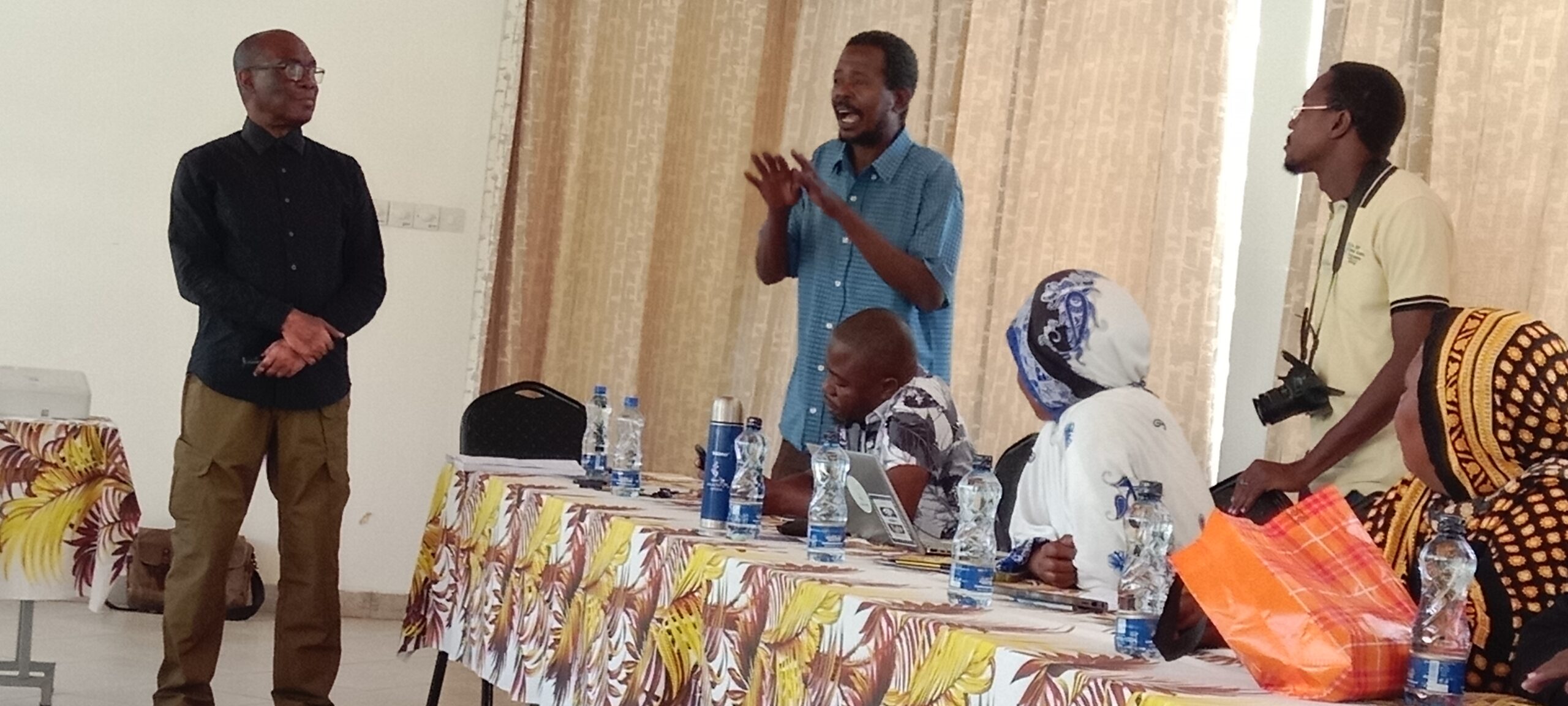
It is within this spirit of innovation and collaboration that Wetlands International Eastern Africa, together with partners including World Wide Fund for Nature (WWF), The Nature Conservancy (TNC), Kenya Marine and Fisheries Research Institute (KMFRI), Kenya Forest Service (KFS), Kenya Wildlife Service (KWS), and with the support of the Government of Kenya, joined the launch of the Global Mangrove Alliance Kenya Chapter (GMA-Kenya). The Chapter brings together government, civil society, communities, and development partners to accelerate mangrove conservation and restoration nationwide. At the same event, several game-changing national tools for mangrove governance were also launched: the National Mangrove Ecosystem Restoration Guidelines, the Mangrove Tree Nursery Manual, the Mangrove Technical Order No. 1 of 2025, and the Mangrove Harvest Management Plan for Lamu County (2025–2035).
These frameworks, together with the coordination provided by the GMA-Kenya Chapter and grassroots innovations such as PRATI’s beekeeping, crab fattening, recycling, and restoration, show how national policy and community action can reinforce one another. They highlight how Kenya’s mangroves can be protected for people, nature, and future resilience. And as Kenya continues to chart its blue economy path, these coastal voices remind us that progress lies not only in high-level strategies but in the quiet persistence of communities who plant, protect, and innovate for their future.
On Pate Island, the tide is turning one mangrove, one crab pen, one recycled bottle, one honey bee-hive, and one determined community effort at a time.