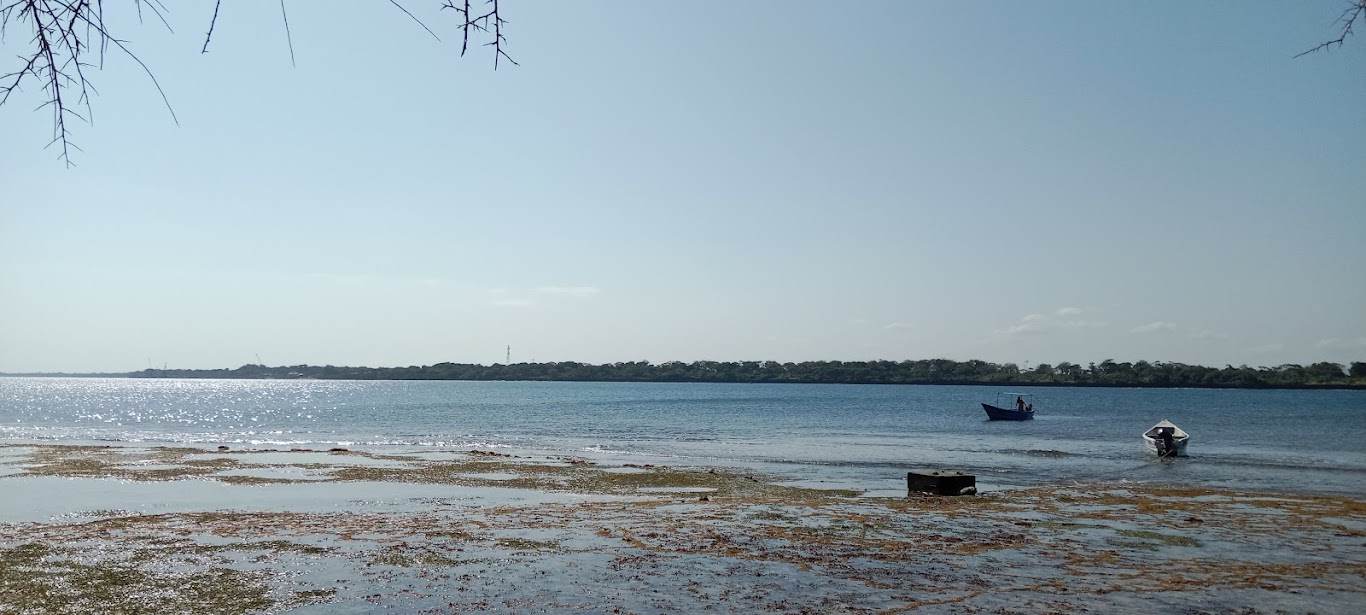
At sunrise in Junda beach, Kisauni, Mombasa County, the sea looks calm and forgiving. Small wooden boats rock gently near the shore. Young men pull their nets, getting them ready for the day’s work, while others smear grease along the cracks of their old boats, carefully sealing them so no water leaks in when they sail into the ocean.
For many of them, especially the youths, the ocean is no longer just water. It is a second chance.
Hamisi Juma, in his late twenties remembers very well the day he almost gave up on school.
“My parents couldn’t afford my school fees,” he said quietly. “After primary school, I stayed home. I didn’t have a job. I didn’t know what to do next.”
Juma said he decided to relocate from his rural home in Rabai, Kilifi County, to Junda in Mombasa County to join his father, who worked as a fisherman at Junda Beach. From then on, he accompanied his father to the sea every morning and started to learn how to cast nets and catch fish.
Juma started as a sailor, waking before dawn, learning discipline and teamwork. The work was tough. Trying to work according to the changing tides of the ocean. With the indigenous knowledge from the elders, Juma said he was able to navigate the changing climate times at the sea.
He said sometimes he would return with almost nothing in their nets. But slowly, he began earning small amounts of money. After a year, he had saved enough, he returned to school.
“Fishing paid my fees,” he said with a smile. “I finished high school.”
Later, he received special training in one of the Technical colleges in Mombasa in the blue economy and even earned a permit to captain a vessel. Today, he helps lead other young people.
“I don’t see this job as a disgrace,” he said. “It gave me my life back.”
But Juma’s story is not unique. Many other boys around him faced the same struggle. Based on recent reports, the poverty rate in Kisauni Constituency, which includes Junda ward in Mombasa County, is estimated at approximately 25%. Therefore, most parents can barely afford three meals a day, let alone pay school fees for their children.
According to Mombasa police statements and related reports, youths join criminal gangs primarily due to poverty, high unemployment, and lack of economic opportunities in informal settlements.
But poverty was not the only challenge facing families in Junda, a small village by the sea. The ocean itself was changing, becoming less predictable and harder to depend on.
Fish stocks were shrinking. The weather became unpredictable. Sometimes strong winds destroyed boats. Climate change was slowly stealing the livelihoods that coastal families had depended on for generations.
“When the fish disappear, there is no food, no income,” Juma said. “And when there is no income, young people lose hope.”
In this cycle of poverty, unemployment, and climate stress, crime became an easy trap for the youths to join in criminal gangs.
To keep young people from falling into this trap, a group of local fishermen decided they could not just stand by and watch their community fall apart. They formed a community-based organization called Kulaga Fishermen CBO, with Juma chosen as one of the officials. Together, they started a simple program to mentor young people and help them explore opportunities in the ocean economy.
Each year, they select ten youths whose parents cannot afford secondary school fees and train them to work safely and legally at sea.
They would teach them how to fish, repair nets, navigate boats, and save money. They would also mentor them.
“We wanted to protect them,” said Charles Wafula who is the chairperson of the CBO. “If they are busy learning and working, they will not join criminal gangs.”
Since 2017, more than fifty youths have joined the program. Many now support their families. Some have gone back to school or taken technical courses. Others mentor the next group.
The program also tries to include young women who help in fish processing, bookkeeping, and managing sales. Wafula said involving women is key, because when women earn, not only their families benefit but the whole community.
Abdallah Khamisi, in his early twenties, is among the youths recruited this year. His parents could not afford his secondary school fees, so he chose to join the program. He explained that, instead of sitting idle while his friends went to work at sea, he decided to join them and learn.
“At the sea, we work together,” he said. “We teach each other and share the tools and skills we need. You listen to advice from friends and elders, and before you know it, you’ve left bad company behind. You stay away from trouble and focus on honest work. Life at the ocean is about commitment and earning your own money through hard work.”
“Even though the money is little, it still helps us push the wheel of life,” He added.
To adapt to the changing climate, the group is learning new methods like better storage to reduce waste and safer boats to handle rough weather.
Dr. Emmanuel Mbaru, a Research Scientist in Fisheries Assessment and Technology at WorldFish, said fishing can help reduce crime by giving young people an opportunity to work, learn skills, and focus on honest income. He described the program as a significant step for young people.
“It is not easy for young people to come together and collaborate on a single project. If they have succeeded in bringing them together to get involved in fishing, earn an income, and stay away from crime, that is a big achievement. This is a model that should be replicated in other areas.” He said.
“It is something that deserves more attention. Even the government could play a role by supporting these young people, showing them where to get help, and helping them grow further. Programs like this not only provide livelihoods but also strengthen the community and keep young people on the right path.” He concluded.